


The custom software development costs depends on various factors, such as the project’s size, complexity, and the development team’s location. So, understanding how much does it cost to create a software is essential for you to budget effectively.
To answer the cost question, the software development costs vary widely based on the project’s needs. Small apps with basic features cost around $50,000, while complex enterprise solutions can exceed $500,000. It depends on the required functionality and features.
Want to learn more about what influences the cost of software? Read the full blog to explore detailed insights, from development phases to key factors like design, team location, and payment models. Knowing these details can help you make informed choices for your project.
Let’s start!
Factors That Influence the Software Development Costs
Different key factors can influence the overall software development costs. Identifying factors that affect software development cost and productivity is needed. Each factor can affect the time per hour and effort needed to complete the project. Let’s look at some of the main factors:
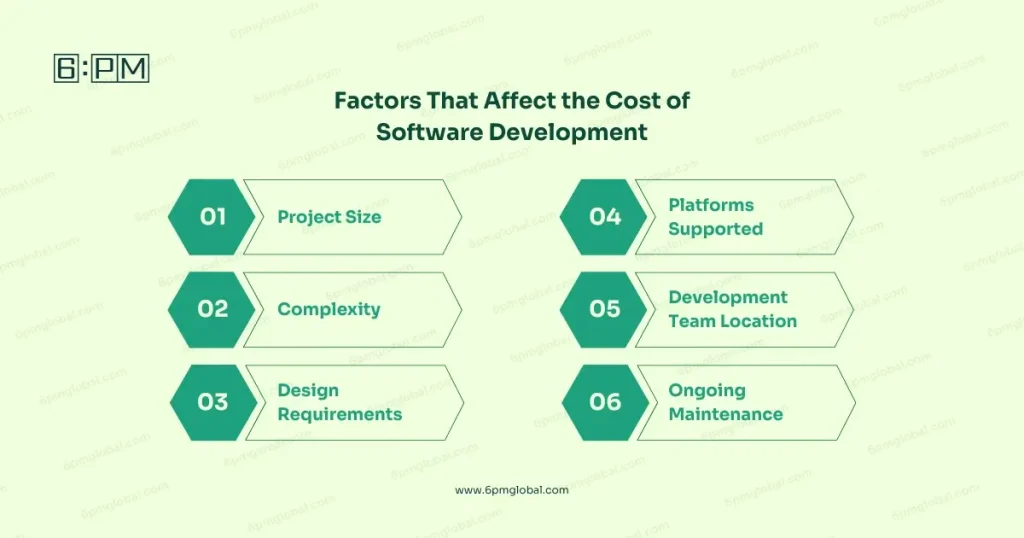
Project Size
The size of the software project plays a big role in determining the cost. The number of screens, modules, or features directly impacts the budget. Smaller apps with fewer screens and features will be cheaper to develop.
On the other hand, large, complex systems with multiple modules or features will require more time and resources, raising the cost.
Complexity
Another important cost factor is the complexity of the software’s features. Advanced features like real-time data processing, artificial intelligence, or integration with third-party systems require more development effort. The more complex the feature, the more work is needed, leading to higher overall costs.
Design Requirements
The software’s design can significantly affect the budget. If the project requires sophisticated and highly customized user interfaces (UI) or user experiences (UX), the design will require more time and expertise.
This results in a higher cost, as detailed and unique designs often take more effort than standard, simpler ones.
Platforms Supported
Developing software for multiple platforms (such as iOS, Android, and web) adds to the complexity and cost.
If a cross-platform solution is not possible, the team may need to build separate applications for each platform. It increases both development time and the cost.
Development Team Location
The location of the development team can have a big impact on the cost due to different hourly rates. For example, developers in countries like the U.S. or Western Europe generally charge more than those in Eastern Europe or Southeast Asia.
Well, choosing a location with lower rates can reduce the cost without compromising quality as well.
Ongoing Maintenance
Software development doesn’t end with the initial launch. Continuous updates, bug fixes, and performance improvements are necessary to keep the software running smoothly.
Plus, ongoing maintenance adds to the long-term project cost and should be considered as part of the total budget.
How Much Does It Cost to Create a Software
The software development costs can vary widely based on the project’s size, complexity, and features. It can range from $50,000 to over $500,000. Below is a breakdown of the costs based on the size and scope of the project:
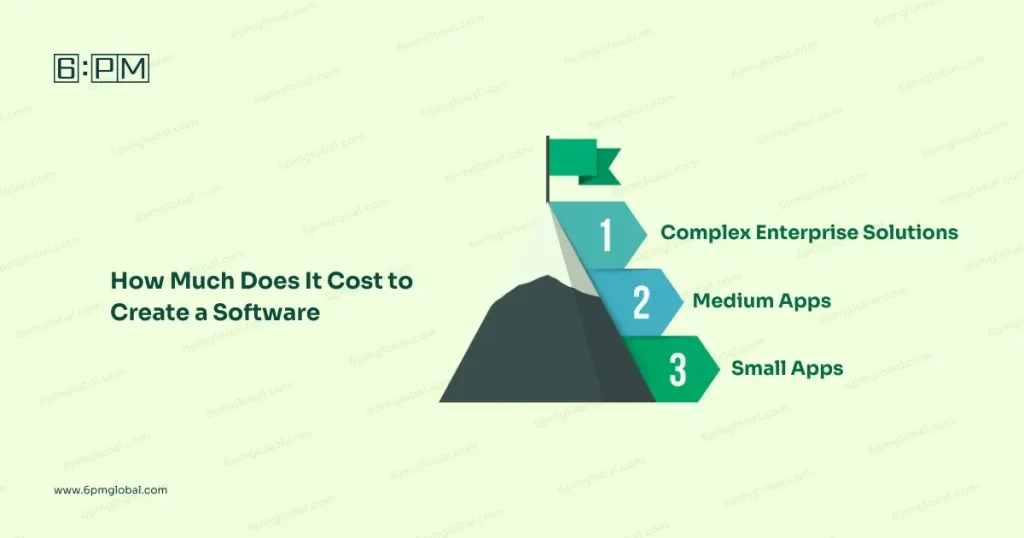
Small Apps
Small applications, typically with fewer than 25 screens and basic features, can cost between $50,000 and $100,000. These apps are often straightforward and handle simple tasks.
They are ideal for businesses looking for a simple solution with minimal functionality.
Medium Apps
Medium-sized projects with around 40 screens and more advanced features can range in cost from $100,000 to $250,000.
These apps often have more user interactions, additional integrations, and better performance. This makes them suitable for development companies looking for more proper functionality.
Complex Enterprise Solutions
Enterprise-level solutions that support large user bases and involve complex integrations can cost $400,000 or more.
These systems often include features like data processing, scalability, and security, requiring significant development time and resources. They are designed to handle complex business needs.
Payment Models for Software Development
Various payment models for software development offer different advantages based on the project’s requirements. Understanding these models can help you choose the one that best fits your project and budget:
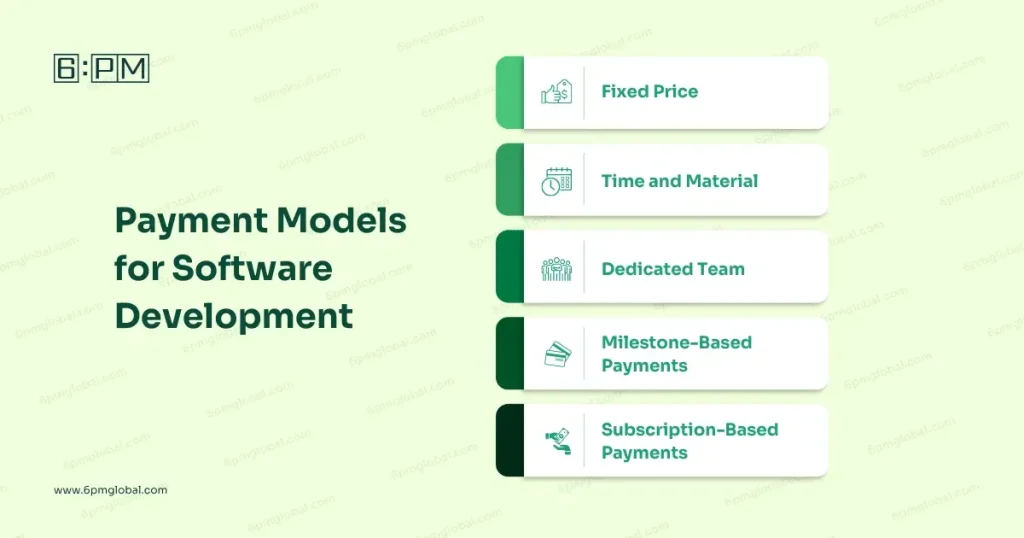
Fixed Price
This payment model is perfect for projects with clearly defined requirements and goals. The client pays a fixed development price, and the cost remains the same throughout the development process.
Moreover, the model works best for smaller, well-defined projects but can be risky if the project scope changes during development.
Time and Material
For projects where requirements may change or evolve over time, the time and material model offers flexibility. The client pays for the actual time spent by software developers and the resources used.
It’s proper for long-term or complex projects that may need adjustments as development progresses. Plus, it allows for changes without affecting the overall plan.
Dedicated Team
In this model, a full team of developers is dedicated to your project for a specific period. This approach offers greater control over the development process and allows for ongoing adjustments.
However, it tends to be more expensive than other models since you’re paying for an entire team’s time and effort, regardless of the project’s pace.
Further, you can contact us. We can help you by offering flexible offshore tech teams with expert guidance that ensures cost-effective and efficient development solutions for your business.
Milestone-Based Payment
With milestone-based payments, the client makes payments at agreed-upon stages of the project. The model is useful for keeping the project on track and ensuring both parties stay aligned.
Each payment corresponds to the completion of a significant phase, such as design, development, or testing, offering clear progress checkpoints.
Subscription-Based Payments
Last but not least, this model involves paying a recurring fee, usually monthly or annually, for continuous development, maintenance, and support. It’s ideal for projects that require ongoing updates and enhancements after the initial launch.
Also, the method spreads out the cost of developing, over time. It provides continuous improvement and bug fixes without large upfront payments.
How to Reduce the Software Development Costs
Reducing software development costs is possible with thoughtful strategies. Here are many ways to manage and lower expenses while maintaining quality:
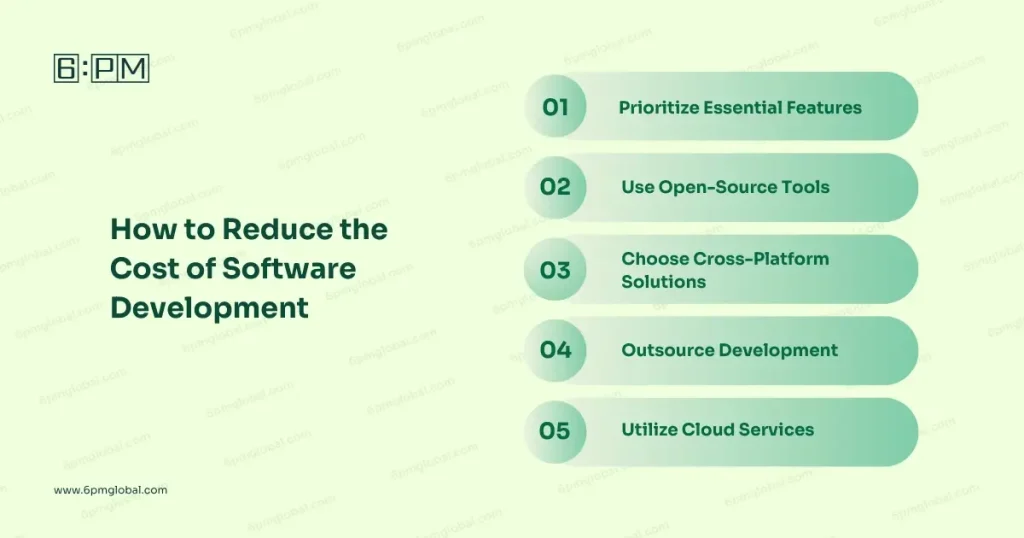
Prioritize Essential Features
Start by focusing on the core functionalities of your software through a Minimum Viable Product (MVP). The cost to build only the essential features first, you can reduce initial development time and costs.
Additional features can always be added later based on feedback and actual user needs, allowing you to scale the project gradually.
Use Open-Source Tools
Open-source software and APIs are a great way to cut average costs. These tools provide pre-built solutions that developers can integrate without starting from scratch. Also, you save both time and money on development while maintaining flexibility to customize features when needed by using open-source components.
Choose Cross-Platform Solutions
Building separate apps for different platforms can increase costs. By using cross-platform development frameworks, such as React Native or Flutter, you can deploy your software on multiple platforms (iOS, Android, web) with a single codebase, reducing both development costs and time.
Outsource Development
Outsourcing countries with lower labor costs is a common way to reduce expenses while maintaining quality.
However, choosing a reliable development team and ensuring clear communication and standards is essential. This approach allows you to utilize skilled developers at a lower rate than in-house or local teams.
Utilize Cloud Services
Using cloud-based infrastructure can reduce the cost of hosting and maintaining software. Cloud providers offer scalable solutions that allow you to pay only for the resources you use, which avoids the upfront investment in physical servers.
Well, this flexibility helps to optimize costs, especially as the project grows.
The Bottom Line
To sum up, custom software development costs depends on many factors, like the size of the project, how complex it is, and where the development team is located. By understanding these cost factors and choosing the right payment model, businesses can manage their budget more effectively.
Moreover, strategic choices, such as focusing on important features, using open-source tools, and outsourcing, can help reduce costs without losing quality.
So, if you’re wondering how much does it cost to create a software, these decisions will make a big difference.
All the best!
FAQs
How does custom software differ from off-the-shelf software in cost?
Custom software is tailored to your needs and can be more expensive than off-the-shelf solutions. Off-the-shelf software has a one-time purchase or subscription fee, while custom software has a higher upfront cost to develop
How much does maintenance cost after software development?
Maintenance usually costs around 15-20% of the initial development cost annually. It includes updates, bug fixes, performance improvements, and adding new features to keep the software up-to-date and running smoothly.
What are the hidden costs of software development?
Hidden cost depends on the additional testing, licensing for third-party tools, post-launch support, ongoing maintenance, and unexpected changes in project scope. Budgeting for these potential expenses is essential to avoid surprises.
How does software complexity impact the cost?
The more complex the software, the more time and resources are needed to develop it. Complex features like AI, real-time processing, or third-party integrations significantly increase the cost compared to basic functionality.
Can using open-source tools reduce development costs?
Yes, using open-source tools can lower development costs because they provide pre-built components. Instead of building features from scratch, developers can use these tools to save time and money during the development process.