

In the startup world, technology fuels innovation and growth. But what if you can’t afford a full-time tech leader? That’s where a Fractional CTO comes in a part-time tech expert who brings strategic vision without breaking the bank.
Startups often face challenges like limited tech knowledge, unclear tech direction, or tight budgets. These issues can slow growth and make it hard to compete. So, if you hire the right fractional CTO for startup, they can help fix these problems without the cost of a full-time hire.
Not detailed enough? No worries! In this blog, you’ll learn when to hire one, how to define your needs, how to maintain a scalable relationship with the CTO and some sample interview questions to hire them.
Let’s start!
When Should You Hire a Fractional CTO?
Knowing when to hire a fractional CTO is important for your startup’s success. It’s about recognizing the right moment to bring in expert tech leadership without committing to a full-time CTO role.
Here are some key scenarios where a fractional CTO can be excellent:
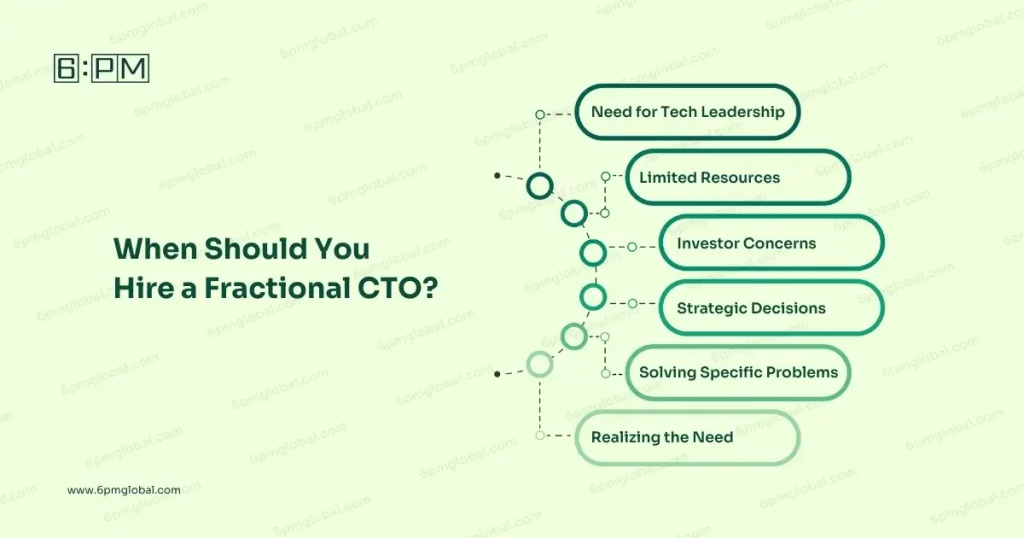
Need for Tech Leadership
If your startup lacks a tech leader, a fractional CTO can provide strategic direction and help build a robust technology infrastructure. They ensure your tech aligns with business goals and supports growth.
Limited Resources
With a limited budget, hiring a full-time CTO might not be feasible. A fractional CTO offers cost-effective tech expertise, allowing you to leverage high-level guidance without the full-time commitment.
Related Article: 5 Ways to Find Budget-Friendly CTO Solutions for Startups & SME’s
Investor Concerns
If investors are hesitant due to a lack of technical expertise or a clear technology strategy, fractional CTOs can address these concerns. They help develop a compelling tech vision that aligns with your business objectives.
Strategic Decisions
Your product development team may need guidance on strategic technical decisions. A frac CTO provides the necessary expertise to ensure these decisions support your business goals and drive innovation.
Solving Specific Problems
Well, if you face a specific tech-related challenge or need oversight on a project, fractional CTOs can step in. They bring specialized expertise to solve complex problems efficiently and effectively.
Realizing the Need
If you feel your business could benefit from solid tech leadership, it’s time to consider a fractional chief technology officer. They can help you navigate the tech landscape and drive your startup towards success.
How to Hire the Right Fractional CTO for Startup: Step-by-Step Process
Find out the step-by-step process to hire the right fractional CTO for startup easily:
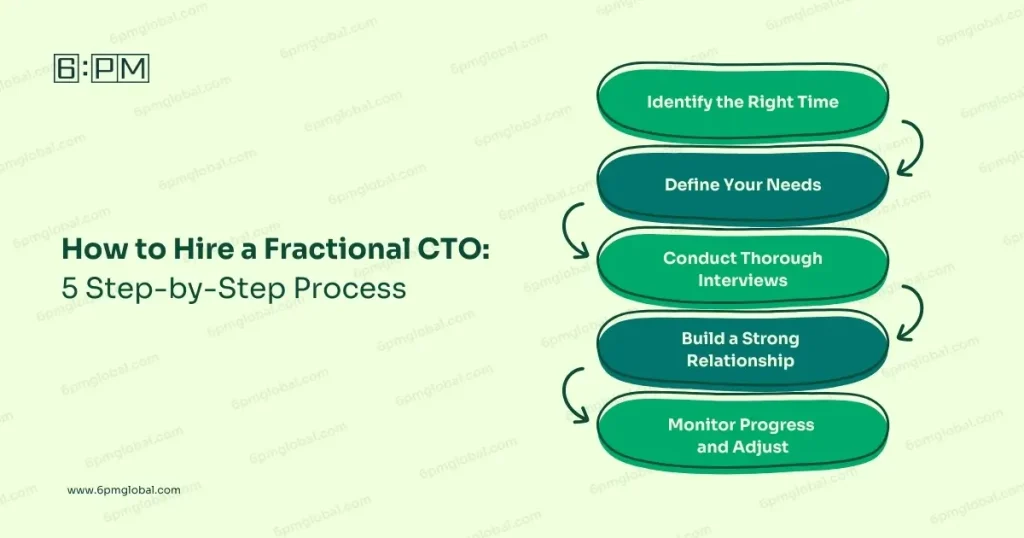
Identify the Right Time
Determine when you need a fractional CTO by assessing your startup’s tech challenges and growth stage. This ensures you bring them in at the right moment to maximize their impact.
Define Your Needs
Clearly outline what you expect from a fractional CTO, including strategic guidance, team leadership, and tech expertise. It helps you find the right fit for your startup’s specific needs.
Conduct Thorough Interviews
Well, you need to ask about their experience, approach to tech roadmap, and past successes. This will help you gauge their expertise and cultural fit with your startup.
Build a Strong Relationship
Try to develop open communication and set clear expectations. Regular feedback and mutual understanding are key to a successful partnership with your Fractional CTO.
Monitor Progress and Adjust
Regularly review their performance and adjust your strategy as needed. This ensures their contributions align with your evolving business goals and tech situation.
Interview Questions for Fractional CTOs
When interviewing a Fractional CTO, it’s essential to ask the right questions to assess their suitability for your startup. Here are some questions to consider:
1. Can you describe your experience working with startups in a similar stage to ours?
This question helps identify whether the candidate understands the unique challenges faced by early-stage startups like yours. It reveals their ability to navigate similar environments and provide relevant guidance.
2. How do you stay up-to-date with the latest technology trends?
This shows the candidate’s commitment to continuous learning and their ability to adapt to new technologies. It also shows whether they can bring fresh insights and innovative fractional CTO services to your startup.
3. Tell us about a time you had to make a critical technical decision under tight deadlines. How did you handle it?
Well, this question evaluates the candidate’s decision-making skills under pressure. It reveals their ability to think critically and make sound technical decisions quickly, which is crucial for startups facing rapid changes.
4. How do you approach building and managing technical teams?
This one identifies the candidate’s leadership style and their approach to team management. It helps ensure their methods align with your expectations for team leadership and collaboration.
5. Can you provide examples of successful projects you’ve led or contributed to in the past?
The question looks for tangible evidence of the candidate’s past successes. It helps verify their ability to deliver results and manage projects effectively.
6. What previous experience do you have, especially related to our specific industry or technical challenges?
It shows the candidate’s familiarity with your industry and their ability to address specific technical challenges. It ensures they have relevant knowledge to guide your startup effectively.
7. If relevant, can you describe your experience managing remote teams?
The question evaluates the candidate’s ability to lead teams remotely, which is important if your startup operates with distributed teams. It shows whether they can effectively manage and communicate with team members across different locations.
8. What approach do you take to cybersecurity and data privacy?
This one shows the candidate’s understanding of cybersecurity and data privacy issues. It identifies their ability to protect your startup’s data and maintain a secure technology environment.
How to Build a Good Relationship with Your Fractional CTO for Startup Success
Building a strong relationship with your fractional CTO is very important to unlocking their full potential and growing your startup’s success. It involves creating an environment where they can effectively contribute and help you achieve your business goals.
Here are some strategies to build a good relationship with your Fractional CTO:
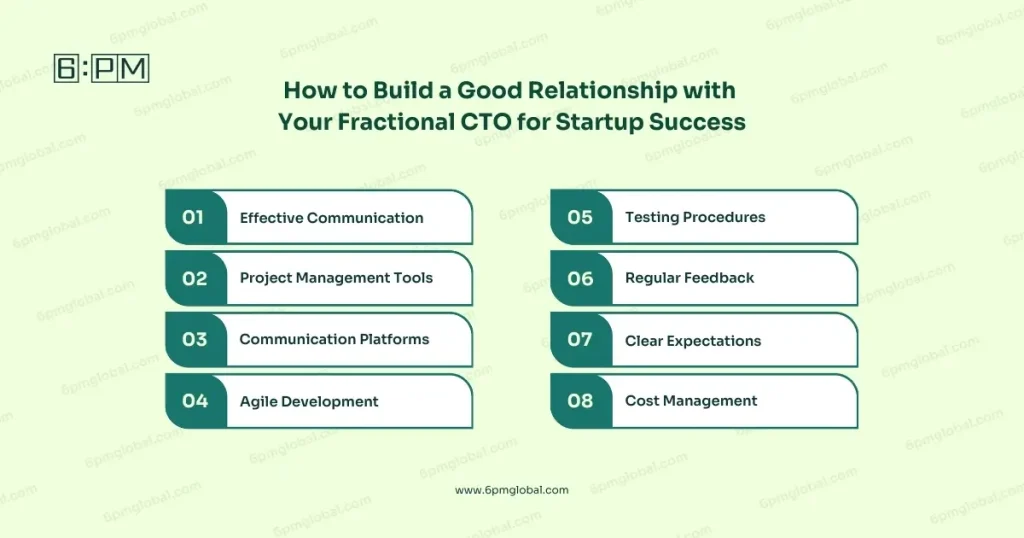
Effective Communication
First of all, communicate early and often. Clearly share your product mission, vision, and development goals to ensure everyone is on the same page. This helps prevent misunderstandings and aligns efforts towards common objectives.
According to PWC, 86% of employees and executives cite a lack of collaboration or ineffective communication as the primary cause of workplace failures.
Project Management Tools
Next, you need to use tools like Jira or Trello to track progress and keep projects organized. This transparency helps your Fractional CTO stay updated and focused on key tasks.
Communication Platforms
You must have to optimize platforms like Slack or Discord for efficient communication. These tools facilitate quick updates and discussions, ensuring seamless collaboration.
Agile Development
So, this one is necessary. You need to implement agile methodologies like Scrum or Kanban to manage projects effectively. The approach allows for flexibility and quick adaptation to changes.
Testing Procedures
Now, you have to implement thorough testing throughout the software development process. This ensures high-quality outputs and helps identify issues early on, which is beneficial to your startup.
Regular Feedback
Always, provide regular feedback and actively seek advice from your Fractional CTO. The open dialogue helps refine strategies and address challenges promptly and the result will amaze you surely.
Clear Expectations
Clearly articulate your mission and vision, and engage your fractional CTO on the why behind your product. The deep understanding helps them align their efforts with your core goals seamlessly.
Cost Management
Last but not least, set a budget range you can afford and discuss it with your fractional CTO. It ensures that spending aligns with your financial capabilities and avoids unnecessary expenses.
The Bottom Line
To sum up, if you hire the right fractional CTO for startup, it’ll transform your business very quickly. By defining your needs, conducting thorough interviews, and building a strong relationship, you can use their expertise to achieve your goals.
Remember that, a frac CTO is a strategic partner who helps navigate tech complexities. To succeed, focus on clear communication and mutual understanding as well.
Consider the perfect fractional CTO for Startup as a key strategy for driving growth and innovation. Find your expert tech solutions today at 6PM Global!
FAQs
What skills should a fractional CTO have?
Fractional CTOs should have strong tech leadership skills, strategic thinking, great scaling and excellent communication abilities. They should be able to guide tech teams and make strategic decisions.
How do I find a fractional CTO?
Find a frac CTO through networking, referrals, or specialized recruitment agencies. You can also search online platforms that connect startups with tech experts.
What questions should I ask in an interview?
Ask about their experience with startups, their approach to tech strategy, and how they stay updated with tech trends. Also, inquire about their team management style and past successes.
What are the benefits of hiring a fractional CTO?
Benefits include salary savings, access to high-level expertise, and strategic tech guidance. A frac CTO helps startups navigate complex tech decisions and drive innovation.
Can a fractional CTO work remotely?
Yes, a fractional CTO can absolutely work remotely. Many are experienced in managing remote teams and can effectively communicate and collaborate digitally.