


Custom healthcare software is changing the game in the healthcare industry, making patient care better, workflows smoother, and regulations easier to handle. It’s all about creating software that fits your exact needs.
Yes, there are issues like security and costs, but careful planning and the right tech can solve them. This software automates routine tasks, improves data security, ensures regulatory compliance, and enhances communication.
In this guide, you’ll explore what custom healthcare software is, see real examples, and learn about its pluses. You’ll also get the inside scoop on challenges, costs, and how to make it all work for you.
Let’s buckle up!
What is Custom Healthcare Software Development?
Custom healthcare software development means building personalized software for healthcare organizations. Instead of using generic, off-the-shelf programs, it creates customized solutions to tackle specific healthcare challenges. This helps streamline processes, improve patient results, and improve efficiency. For example, custom software can create electronic health records (EHR) systems or telemedicine platforms.
In fact, healthcare organizations choose custom software to address interoperability, data security and specific workflow needs which results in better patient care. This gives healthcare providers the tools they need for their unique workflows.
Related Article: Custom Software Solutions: Increase Productivity Upto 50%
Examples of Custom Healthcare Solutions
Custom healthcare software can take many forms, from programs designed for patients to tools that help healthcare providers. Here are some examples of what this software can do:
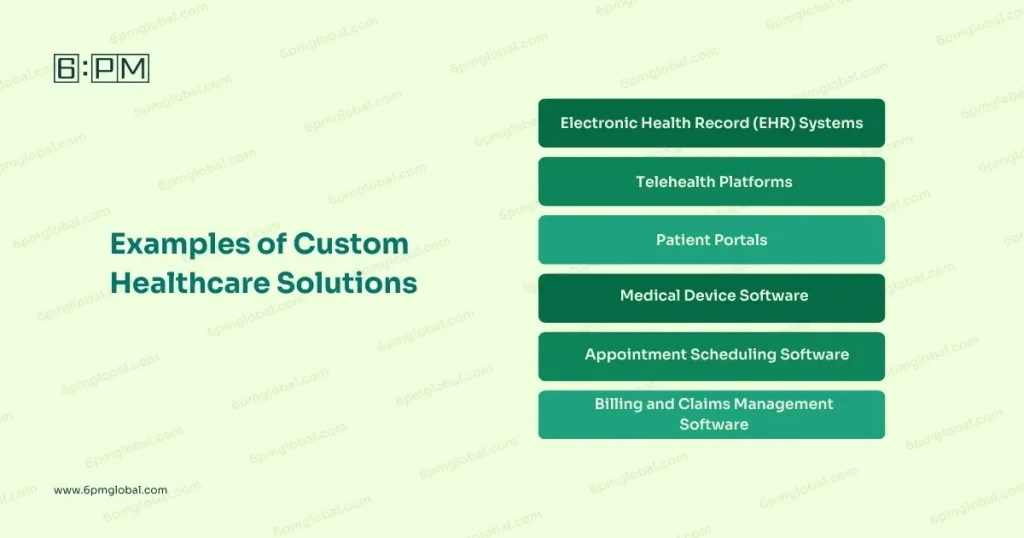
Electronic Health Record (EHR) Systems
These systems help manage patient information efficiently and accurately. Custom EHRs improve how different healthcare systems work together, ensuring that important medical details are easily accessible when needed. This leads to better-coordinated care and fewer errors.
You’ll be glad to know that, over 95% of hospitals in the United States have adopted EHR systems, highlighting their critical role in modern healthcare.
Telehealth Platforms
Telehealth platforms enable remote patient monitoring and virtual consultations. These platforms allow patients to connect with doctors from home, making healthcare more accessible. Custom telehealth apps can also facilitate secure communication between patients and providers.
Patient Portals
Patient portals give patients access to their medical records and allow them to schedule appointments and view test results. These portals empower patients to take a more active role in their healthcare. They also improve communication with their healthcare team.
Medical Device Software
Custom software can control and monitor medical devices, as well as collect data to improve how these devices function. It actually ensures accurate diagnostics and seamless data integration.
The FDA regulated over 19,000 firms manufacturing approximately 200,000 SaMD (Software as a Medical Device) units between 2020 and 2021. This reflects the expansive use of software in medical
Appointment Scheduling Software
This simplifies patient appointments and manages both in-patient and out-patient populations more effectively. Efficient scheduling helps reduce wait times and improves the overall patient experience.
Billing and Claims Management Software
These systems automate billing software processes, reduce errors, and improve revenue cycle management. This ensures accurate financial operations and reduces administrative burdens.
Benefits of Custom Healthcare Software Development
Custom healthcare software offers many benefits that can transform how healthcare providers operate and deliver care. Here are some of the key advantages:
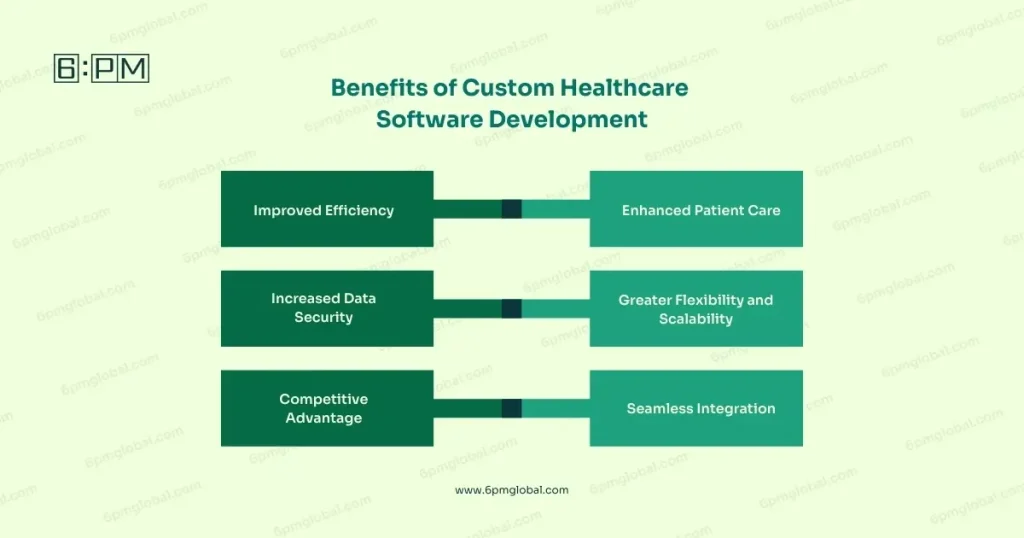
Improved Efficiency
Custom software can automate routine tasks, simplify workflows, and reduce the administrative workload. This automation frees healthcare professionals, which allows them to dedicate more time and energy to patient care.
Well, automated appointment scheduling, billing, and patient data entry enhance overall productivity.
Enhanced Patient Care
By providing better access to information and improving communication, custom software products lead to better patient outcomes and a more positive experience. Telemedicine, mobile apps, and online patient portals make it easier for patients to access medical information, book appointments, and communicate with healthcare providers.
Plus, remote monitoring enhances care access and alleviates patients’ travel burden.
Increased Data Security
Custom solutions can be built with robust security measures to protect sensitive patient data and comply with custom healthcare software development company regulations like HIPAA and GDPR. Detailed access controls and routine audits ensure that only permitted individuals can obtain patient information. This reduces the likelihood of healthcare data breaches.
Greater Flexibility and Scalability
Custom software can be easily adapted to changing needs and scaled to accommodate growing patient populations. Whether adding new healthcare sectors, services or departments or handling more patients, the software can be updated to meet changing needs.
Well, this adaptability ensures that the software stays a significant resource for years.
Related Article: Custom Development vs Packaged Software: A Comparison Guide
Competitive Advantage
Custom software can help healthcare providers stand out in a crowded market by offering unique custom healthcare software development services and capabilities.
Furthermore, using technologies such as AI, telehealth, and patient engagement tools allows healthcare providers to stay ahead of the market competition and offer innovative and patient-centric services.
Seamless Integration
Custom software development solutions can integrate with existing systems, ensuring seamless data exchange and minimizing disruptions to workflow. Investing in customized health software that connects with EHR (Electronic Health Records) guarantees a unified source of patient information.
Moreover, data synchronization throughout all systems guarantees accuracy and consistency. It reduces errors and enhances operational efficiency.
Challenges of Custom Healthcare Software Solution
While custom healthcare software offers many advantages, it’s important to know the challenges involved in its product development and implementation. Here’s a breakdown:
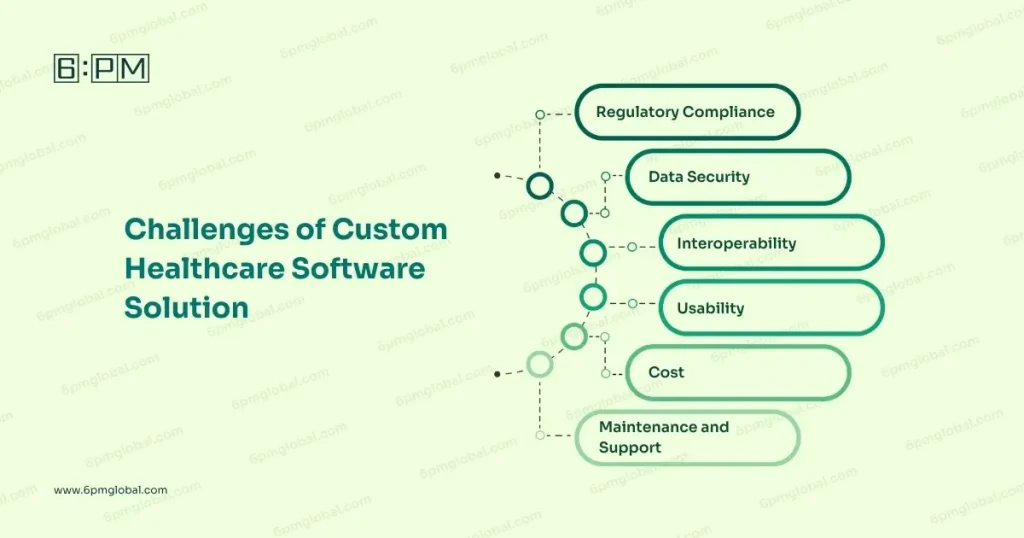
Regulatory Compliance
Healthcare software must follow strict rules like HIPAA and GDPR. These regulations protect patient data but can be complex and time-consuming to navigate. Non-compliance can lead to fines and reputational damage.
Data Security
Protecting patient data from cyber threats is needed. This requires strong security measures and constant monitoring. Healthcare solutions store and collect various patient data, making them susceptible to breaches.
Note that, in 2024, over 275 million healthcare records were breached, with hacking incidents causing nearly 80% of all breaches.
Interoperability
Custom software needs to communicate with other systems like EHRs and billing platforms. Ensuring these systems can exchange data smoothly can be complex. Using industry standards like HL7, FHIR, and DICOM can ease the process and improve interoperability.
Usability
Healthcare software must be easy to use for both patients and providers. User-friendliness ensures adoption and maximizes the software’s effectiveness.
So, user experience should be a major factor in the design, so the software should be easy to use and understand.
Cost
Custom medical software development can be expensive, requiring careful budgeting and cost management. Factors influencing cost include software complexity, integration requirements, security needs, and the development team’s expertise.
Maintenance and Support
Ongoing maintenance, updates, and support are essential for the long-term success of custom software. Healthcare app development should be carefully prepared for technical and security audits in compliance with required healthcare standards.
Cost of Healthcare Software Development
Custom healthcare software costs vary widely, influenced by project complexity, features, and the development team. Here’s a closer look at the factors affecting the price:
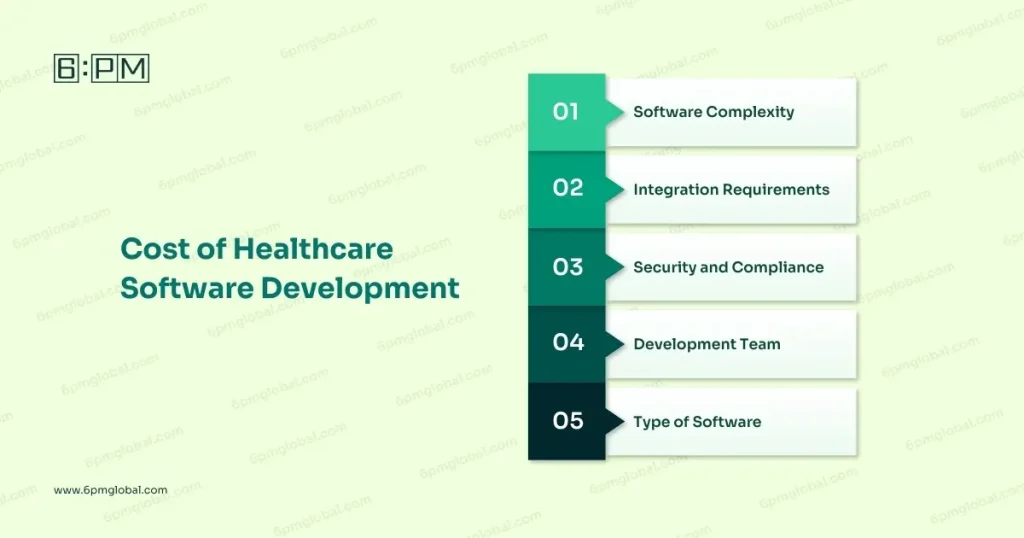
Software Complexity
More complex software with advanced features will generally cost more to develop1. Basic features like appointment booking may range from $5,000 to $10,000, while AI-powered diagnostics can increase the cost to $50,000 or more.
Integration Requirements
Integrating with existing software systems can add to the cost. For example, the cost to build an EHR system ranges from $10,000 to $250,000, while telemedicine software platforms can range from $40,000 to $400,0002.
Security and Compliance
Implementing robust security and meeting regulations like HIPAA will increase costs1. Depending on complexity, medical record apps can range from $15,000 to $65,000. The more compliance measures your software needs, the greater the development effort and the higher the cost.
Development Team
The size, expertise, and location of the development team impact costs. Offshore healthcare software developers may charge $50 per hour, while premier firms in the US or Europe can cost nearly $200 per hour.
Type of Software
The kind of software you want to build may also influence the price. AI and machine learning solutions require high-demand skillsets. Native apps for iOS or Android can cost $15,000 to $30,000 per platform, while cross-platform development can be more cost-effective at $10,000-$20,000.
Conclusion
In conclusion, custom healthcare software development empowers healthcare providers to improve patient care, streamline operations, and achieve a competitive edge.
Thoughtful planning, a clear understanding of potential challenges, and a partnership with a skilled development team are essential for creating custom solutions that precisely meet your organization’s needs.
Therefore, customized functionality, smooth integration, scalability, and regulatory compliance are all within reach.
FAQs
How long does it take to develop custom healthcare software?
Timelines vary depending on the complexity. Simple solutions might take a few months, while complex systems can take a year or more. Regular communication with the development team helps ensure transparency.
How much does custom healthcare software cost?
Costs vary based on complexity, features, and the development team. Integration needs, security requirements, and location also play a role. Careful budgeting and planning are essential.
How do I ensure my software complies with regulations?
Ensure the software aligns with patient data protection standards like HIPAA, HHS, HL7, and the HITECH Act. Local regulations might also apply. Partnering with experienced developers is the solution.
How important is data security in healthcare software?
Protecting patient data is necessary. Implement encryption, access controls, and data anonymization4. You need to Comply with HIPAA and GDPR5 because Cyberattacks are a significant concern.
How do I keep my software up-to-date with medical guidelines?
You have to do regular updates and collaborate with experts on this matter. Adhering to healthcare industry standards ensures your software stays aligned with the latest guidelines. Continuous monitoring is also important.