


Many businesses find that off-the-shelf software doesn’t quite meet their unique needs. While these ready-made options may seem convenient, they often lead to more headaches than solutions. Custom software, customized specifically for your organization, can address your exact challenges and help you grow.
Moreover, custom software solutions can simplify operations, improve productivity, and help you stand out by addressing exact requirements. They adapt to your business’s work, making them more effective than generic alternatives.
Seems interesting? Well, keep reading to learn more about how custom software can transform your business. In this blog, we’ll explore different types of custom software, benefits, challenges, real-life examples, and helpful tips for successful development. Don’t miss out on this valuable insight!
What is Custom Software?
Custom software is a solution created specifically to meet the unique needs of a business. Unlike ready-made software that serves many users, custom software is built to match a company’s exact processes and goals. It helps businesses operate more efficiently by addressing specific challenges.

For instance, a bank may use custom software to manage transactions, or a retailer might use it for better inventory management. According to a report by Grand View Research, the custom software development market is expected to grow at a CAGR 22.4% by 2030, which indicates that custom software solutions are becoming popular day by day for business growth. This personalized approach ensures a perfect fit for your operations that improves productivity and results.
A study found that companies using scalable custom software can see an increase in productivity by up to 50% compared to those relying solely on off-the-shelf solutions. This personalized approach ensures a perfect fit for your operations that improves productivity and results.
Types of Custom Software Solutions
Custom software solutions come in various forms, each designed to meet specific business needs. Plus, custom software can greatly improve efficiency and productivity, from managing content to simplifying operations.
Here are some common types of custom software:

Content Management Systems (CMS)
CMS helps businesses easily manage website content without needing advanced technical skills. It allows for updates, editing, and organizing content efficiently. A well-known example is WordPress, but large companies like TechCrunch often develop custom CMS platforms to handle their specific needs.
Customer Relationship Management (CRM)
CRM systems help manage customer interactions and improve sales processes. They provide tools for tracking leads, managing customer data, and enhancing communication.
Well, Salesforce is a popular CRM, but Airbnb uses a custom CRM system to streamline its customer interactions and optimize its sales processes.
Related Article: Increase Sales By 29% With Custom CRM Software Development
Enterprise Resource Planning (ERP)
ERP software manages a company’s day-to-day operations, such as accounting, project management, and supply chain activities. These systems centralize operations, helping businesses run smoothly.
For example, McDonald’s uses a custom ERP system in its point-of-sale (POS) system to manage orders and inventory efficiently.
Operations Management Software
This software automates and optimizes business processes such as manufacturing, quality control, and supply chain management. It helps businesses track performance and improve productivity.
An example is Torah Resource’s custom operations management software, which handles complex processes unique to their business.
Enterprise Software Solutions
These are tailored systems designed for large organizations to manage core business functions like finance, human resources, and inventory. Amazon, for example, has developed custom software to manage its vast inventory. It ensures smooth operations across its global supply chain as well.
Why Custom Software is Essential for Your Business Operations
Custom software can improve businesses’ operations by addressing specific needs and expanding overall performance. Let’s find out how custom software solutions can transform your business:
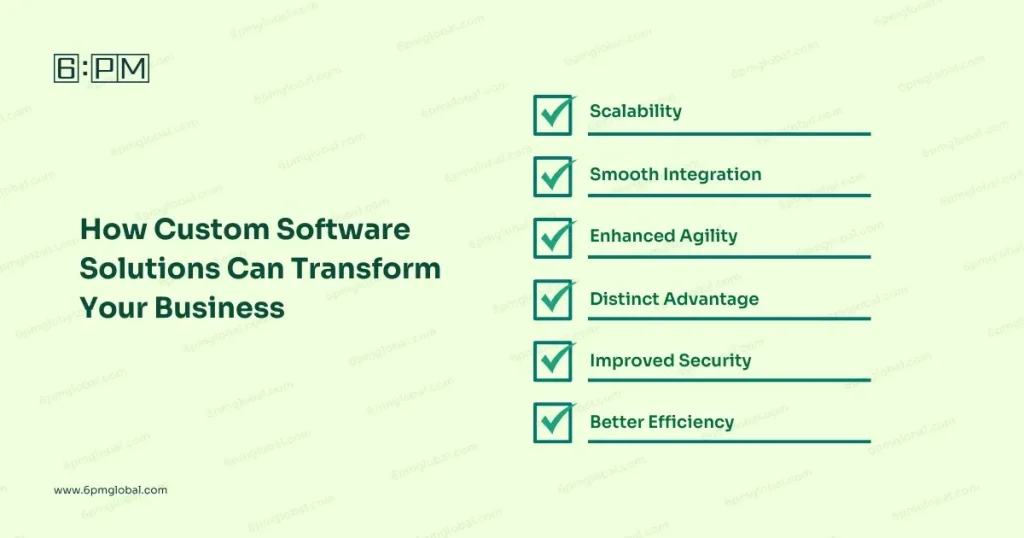
Scalability
Custom software is designed to grow with your business. As your company expands and faces new challenges, the software can adapt to handle increased workloads, ensuring smooth operations without frequent replacements or upgrades.
Smooth Integration
Customized software integrates smoothly with your existing systems. It helps streamline operations by connecting different departments, improving communication, and reducing errors caused by incompatible software.
Moreover, this results in a more efficient workflow across the entire organization.
Enhanced Agility
In today’s market, businesses must adapt quickly. Custom software allows for rapid implementation of new features or adjustments. This gives your business the flexibility to stay ahead of trends and changing customer demands without being limited by generic software.
Distinct Advantage
Custom software gives your business unique functionalities that set you apart from competitors. Whether it’s improved customer service or advanced operational features, this personalized solution allows you to stand out and offer something different that adds value to your customers.
Improved Security
Custom software offers enhanced security since it’s developed specifically for your business. It is less vulnerable to common attacks that target off-the-shelf solutions. Also, it can include specialized security features that align with your company’s data protection needs, ensuring a safer digital environment.
Better Efficiency and Developer
Custom software is designed around your business processes, eliminating unnecessary features and simplifying your operations. Thus, focusing only on what you need improves productivity, minimizes wasted time, and increases your team’s overall performance.
5 Incredible Benefits of Custom-Developed Software
Custom-developed software offers several benefits that can greatly improve business operations and long-term growth. Here are the advantages:
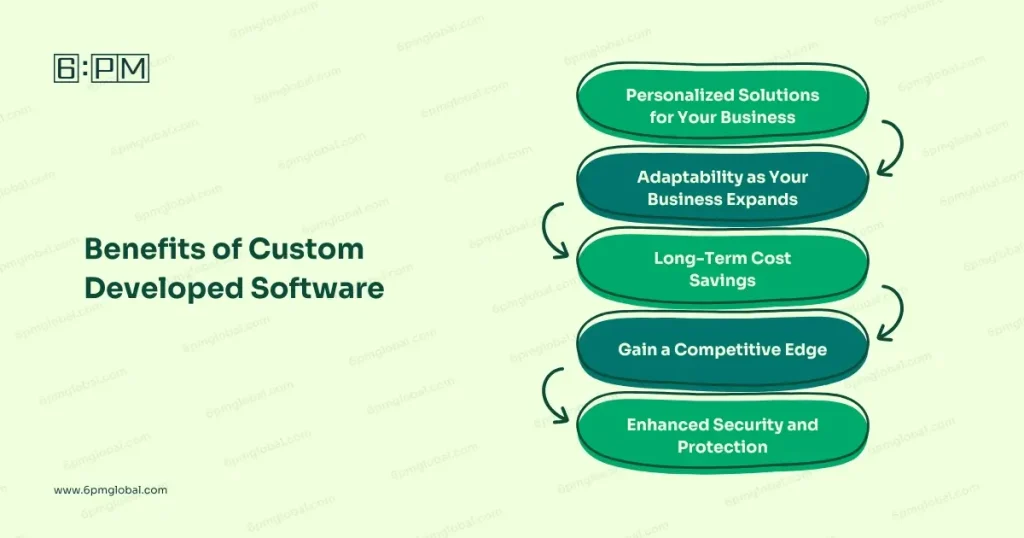
Personalized Solutions for Your Business
Custom software is specifically built to meet your business’s unique needs. It aligns perfectly with your processes, enhancing overall efficiency and performance.
Addressing exact requirements helps your team work smarter, not harder, and ensures that the software evolves with your business as new needs arise.
Adaptability as Your Business Expands
As your business grows, custom software scales with it. Unlike off-the-shelf solutions, which may require frequent upgrades or replacements, custom software handles increasing workloads and operational complexity.
It ensures smooth and consistent performance as your company expands. This adaptability ensures long-term value and stability.
Related Article: 5 Scopes of Custom Software Development for IoT
Long-Term Cost Savings
While custom software might have higher initial development costs, it becomes more cost-efficient over time. It eliminates recurring subscription or licensing fees and reduces the need for constant updates or add-ons.
With fewer third-party dependencies and better alignment with your business, it delivers significant savings in the long run. Well, 6PM Global helps businesses save costs by providing flexible, on-demand CTO services and access to pre-vetted development teams. This eliminates the need for full-time hires or high-salaried executives who reduce upfront expenses while delivering high-quality results.
Gain a Competitive Edge on Development Project
Custom features and functionality personalized to your business give you a distinct edge over competitors. It allows you to offer unique services or improved user experiences, fostering customer loyalty and retention.
This differentiation can help you attract more clients and stand out in a crowded marketplace.
Enhanced Security and Protection
Custom software is built with your specific security needs, making it less vulnerable to common cyber threats. Since it is unique to your organization, hackers and malicious actors are less likely to target it than widely used off-the-shelf solutions.
It enhances data protection and protects your business’s sensitive information.
Challenges in Developing Custom Software
While custom software solutions offer many benefits, there are several challenges businesses may face during their development. Here are some of the most common hurdles:

High Initial Cost
Developing custom software requires a considerable upfront investment. Unlike off-the-shelf solutions, which are ready to use, custom software solutions involve detailed planning, development, and testing.
This higher cost can be challenging for small businesses or startups, but the long-term benefits, such as eliminating licensing fees, are often worth the expense.
Time-Consuming Development
Creating custom software takes more time than simply purchasing ready-made software. It involves understanding your business needs, designing, coding, and testing to ensure it fits perfectly.
This extended timeline can delay the software’s implementation, but the outcome is a software product designed exactly for your business’s unique needs.
Complexity in Integration
Integrating custom software with existing systems can be complicated. Ensuring that the new software works seamlessly with your current tools and processes may require additional effort, such as modifying your existing systems or extra time for testing.
However, once successful, this integration can lead to more efficient workflows.
Maintaining Scalability and Flexibility
Custom software must be designed with future growth in mind. Software developers need to ensure that the software can scale and remain flexible as your business evolves. Failing to account for future needs can result in limitations, requiring costly updates or redevelopment to handle increased demands.
Project Management Challenges
Poor project management can lead to delays, cost overruns, and unsatisfactory results. Custom software development requires careful planning, clear communication, and effective team coordination to stay on track.
Without proper oversight, software development projects can become misaligned with business goals, wasting time and resources.
Project Management Challenges
Poor project management can lead to delays, cost overruns, and unsatisfactory results. Custom software development requires careful planning, clear communication, and effective team coordination to stay on track. According to McKinsey, only 47% of IT projects are completed on time which highlights the critical need for effective oversight.
So, without proper oversight, software development projects can become misaligned with business goals, wasting time and resources.
Key Tips to Consider in Developing Custom Software
To develop a custom software successfully it requires careful planning and execution. Here are some essential tips to guide you through the process:
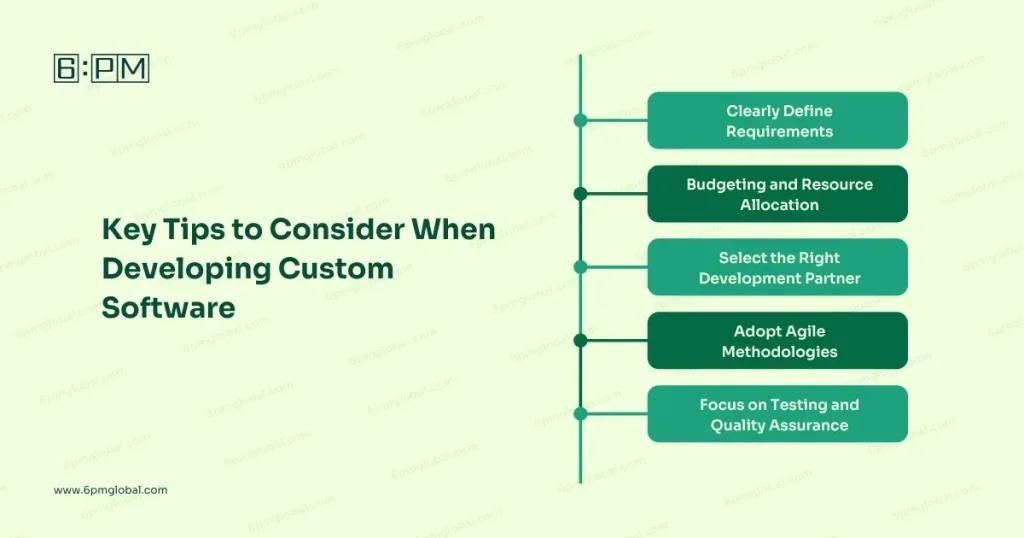
Clearly Define Requirements
Engage with all stakeholders to clearly understand their needs and expectations. It helps ensure the software aligns with business objectives and user requirements, avoiding costly revisions later.
Well-defined requirements serve as the foundation for a smooth custom application development process.
Budgeting and Resource Allocation
Setting a realistic budget and allocating resources wisely is key to a successful custom software project. A clear budget helps prevent overspending and keeps your finances in check. Be aware of hidden costs, like post-launch support and future upgrades, which can add up.
Studies show that nearly 30% of software projects exceed their budgets due to these unexpected expenses. By planning carefully and considering all costs, you can keep your project on track and achieve your business goals without financial stress.
Select the Right Development Partner
Choosing a reliable development team with relevant experience is crucial. Look for a partner who understands your industry and has a proven track record in custom software application development and custom software solutions services. The right team can make the process smoother and more efficient, delivering a high-quality product that meets your needs.
Adopt Agile Methodologies
Using agile development practices allows flexibility and adaptability throughout the project. Agile methodologies help teams respond quickly to changes, whether in requirements or market conditions. It ensures that the software evolves smoothly without major disruptions or delays in delivery.
Focus on Testing and Quality Assurance
Thoroughly test the software to ensure it meets performance, security, and functionality standards. Regular testing throughout the mobile development process helps identify and fix issues early leads to a more stable and reliable product when it’s ready for launch.
Remember that quality assurance is key to avoiding future problems.
Related Article: Custom Healthcare Software Development: Things You Need to Know
Real-Life Examples of Custom Software Solutions
Here are some well-known examples of businesses that have successfully implemented custom software solutions:

Netflix
Netflix developed custom software to analyze user data and deliver personalized content recommendations. Their system can suggest shows and movies customized to each user’s tastes by tracking viewing habits and preferences.
Also, the custom solution has been a key factor in keeping users engaged and enhancing the overall user experience, contributing to Netflix’s global success.
Related Article: Custom Database Software Development: Why It’s Essential
Amazon
Amazon uses custom software to manage its vast inventory and ensure smooth logistics operations. The software enables real-time stock tracking, optimizes warehouse operations, and improves the supply chain.
It also enhances the customer experience by ensuring quick, accurate deliveries. Amazon’s custom solution is needed to handle its enormous order volume efficiently.
Uber
Uber developed custom software to connect drivers and riders through a seamless app-based interface. The software handles ride requests, fare calculations, real-time navigation, and payment processing in one integrated platform.
Well, the custom solution improves efficiency and enhances convenience for both drivers and riders, making Uber a leader in the ride-hailing industry.
McDonald’s
McDonald’s created a custom point-of-sale (POS) system to streamline its ordering process and improve service speed. This software allows employees to handle orders quickly and efficiently, reducing wait times and improving overall customer satisfaction.
The system also integrates with inventory management and kitchen operations, optimizing the restaurant’s workflow.
Related Article: Reduce 40% Inventory Waste with Custom POS Software
Final Verdict
To wrap up, custom software solutions offer businesses the flexibility, scalability, and innovation needed to stay ahead in the market. While the initial cost and app development process may seem daunting, the long-term benefits outweigh the challenges.
So, by carefully planning and considering key factors, you can create software that aligns with your goals and transforms operations. Plus, you can read the real-life examples here as well for better understanding.
Therefore, investing in a custom software solution is a smart move that can improve your business’s success. But if you’re still confused about whether you should go for custom software or not, you can Contact us we will help you to find out what’s possible for your business!
FAQs
How much does it cost to build custom software?
Custom software development costs typically range from $20,000 to over $500,000. The price depends on factors like project size, complexity, and features. Smaller projects are less expensive, while large-scale solutions require a bigger budget and more resources.
Will we need to have a meeting to discuss my software needs?
Yes, meetings are essential to understand your specific software needs. They help clarify your goals and requirements. This communication ensures that the development team can create a solution tailored to your business, increasing the project’s success.
How do I choose the right development team for custom software?
Look for a development team with relevant experience, industry knowledge, and a proven track record. Selecting a partner who understands your business goals and can deliver a solution that aligns with your needs is important.
Why is custom software an expensive investment?
Custom software is costly due to the individualized development process. It involves a skilled team of designers and software developers working on unique requirements. This tailored approach requires more time and resources compared to off-the-shelf solutions, leading to higher costs.
How do you ensure confidentiality?
We prioritize confidentiality by implementing strict security measures. This includes non-disclosure agreements (NDAs) and secure data handling practices. Regular audits and employee training also help maintain confidentiality throughout the development process.
How can I be confident of the quality and reliability?
To ensure quality and reliability, we follow best practices in software development. This includes thorough testing, regular updates, and using proven technologies. Client feedback is also integrated throughout the process to meet expectations and enhance the final product.