


Have you ever wondered how custom software can change the way we use technology? My journey into custom software development for IoT (Internet of Things) opened my eyes to its incredible potential.
Initially, I faced challenges in integrating different devices and ensuring they communicated effectively. I realized that off-the-shelf solutions just wouldn’t cut it.
So, I explored custom development, which allowed me to create tailored applications that fit specific needs. This process involved understanding the unique requirements of each project and choosing the right technologies.
Now, I see how custom IoT solutions can simplify operations and enhance user experiences. Join me as I share more about this exciting field and its impact on our daily lives!
What is Custom IoT Software?
Custom software development for IoT involves creating specialized applications that allow devices to connect and communicate effectively. Unlike off-the-shelf software, these custom solutions are designed to meet specific business needs.
According to research, 68% of companies report that custom software improves their operational efficiency.
When I began working in IoT, I noticed that generic software couldn’t handle the unique challenges we faced, such as device interaction and data flow management.
Therefore, custom development provides the flexibility to adapt as technology changes, ensuring that every aspect—from data handling to user interfaces—is tailored for optimal performance. This approach is essential for businesses looking to utilize IoT technology effectively.
What are the Roles of Custom IoT Software?
Custom development plays many important roles in the IoT ecosystem. Let’s break these down into some points.
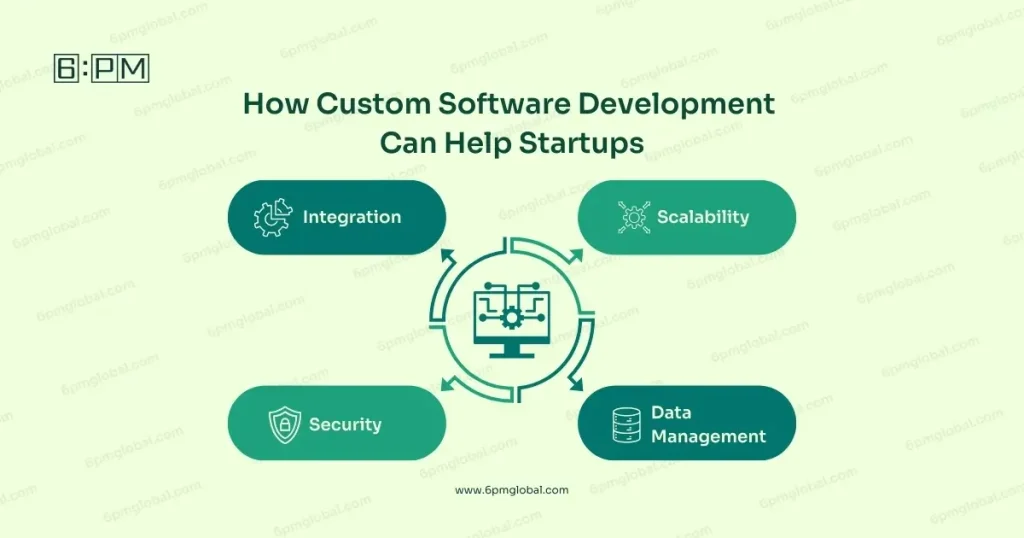
Integration
Custom software ensures that different devices and existing systems work together smoothly. This seamless communication is essential for real-time data exchange. Without proper integration, devices can’t share important information, leading to inefficiencies.
Scalability
As IoT development networks grow, custom solutions can easily adapt to increased demands. This means you can add new devices without worrying about performance issues or security risks. According to IoT Analytics, the number of connected IoT devices is expected to reach 13% to 18.8 billion by the end of 2024.
Hence, custom software grows with your needs, making it a smart choice for expanding operations.
Related Article: Custom Software Solutions: Why Your Business Needs It?
Security
With sensitive data being transmitted, strong security measures are crucial. Custom software allows for personalized security protocols that protect data throughout its lifecycle. This helps prevent data breaches and keeps user information safe.
Data Management
Managing the large volumes of data generated by Internet of Things devices is critical. Custom solutions can optimize how this data is stored and processed. Plus it allows businesses to make quick decisions based on real-time information.
According to IDC, IoT devices are expected to generate nearly 80 zettabytes of data by 2025.
Thus, efficient data management leads to better insights and improved operations too.
Key Technologies Used in Custom Software Development for IoT
When it comes to the technologies powering custom IoT software, several key components stand out. Let’s see them below:
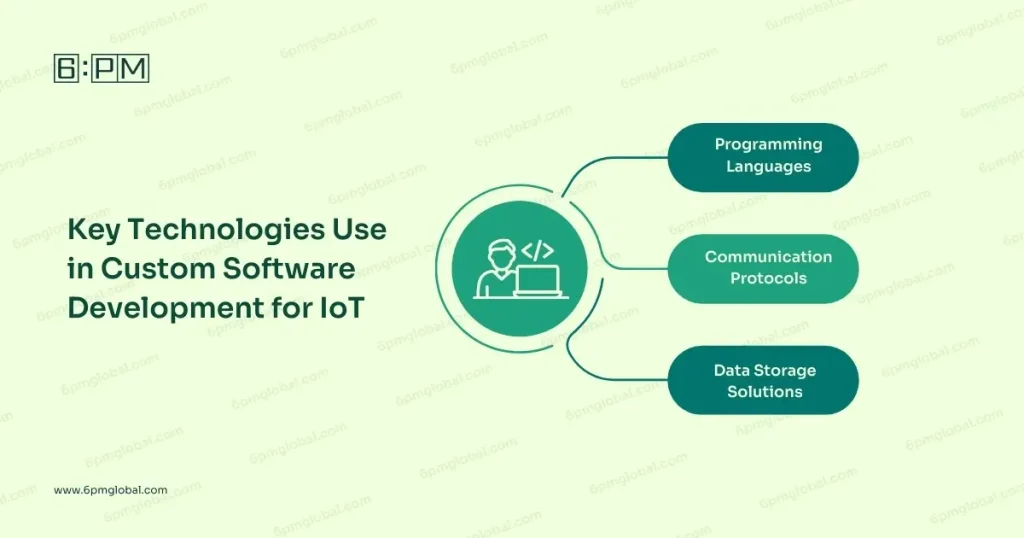
- Programming Languages
- C/C++: Ideal for low-level programming and firmware.
- Python: Great for data processing and machine learning applications.
- JavaScript (Node.js): Useful for real-time applications and server-side services.
- Communication Protocols
- MQTT: A lightweight protocol perfect for resource-constrained devices.
- CoAP: Best suited for low-power devices.
- LoRaWAN: Excellent for long-range communications.
- Data Storage Solutions
- SQL Databases: For structured data storage.
- NoSQL Databases: For flexible handling of unstructured data.
Usage of Custom IoT Software
The IoT application development in custom software is extensive and impactful. Here are some examples that really stand out:
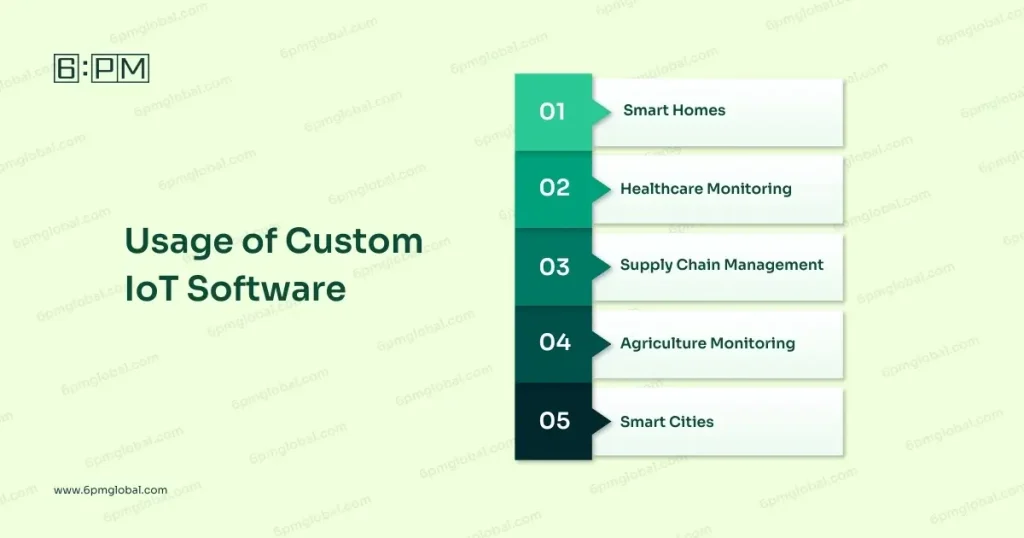
Smart Homes
Custom software can connect devices like thermostats, lights, and security systems into one easy-to-use interface. This integration allows homeowners to control everything from their smartphones.
Imagine adjusting your home’s temperature or checking security cameras with just a tap. It makes life more convenient and enhances energy efficiency.
Healthcare Monitoring
IoT devices can gather patient IoT data in real-time, enabling healthcare providers to monitor conditions remotely. This means doctors can track vital signs and respond quickly to any changes. For patients, it leads to better care and fewer hospital visits, making healthcare more proactive rather than reactive.
Supply Chain Management
Custom software helps track inventory across multiple locations. By monitoring stock levels in real-time, businesses can optimize logistics and reduce waste. This not only saves money but also improves customer satisfaction by ensuring IoT products are available when needed.
Agriculture Monitoring
IoT solutions can monitor soil moisture and weather conditions to help farmers make informed decisions. By using sensors and custom software, they can optimize irrigation and crop management. It leads to better yields and more sustainable farming practices as well.
Smart Cities
Custom software can manage city resources like traffic lights, waste disposal, and public transportation. By analyzing data from various sources, cities can improve efficiency and reduce congestion.
Well, this creates a better living environment for residents while saving development costs for municipalities.
Final Thoughts
To sum up, exploring custom software development for IoT has been an enlightening journey. As we embrace connected smart devices, personalized solutions become essential to tackle challenges like integration, security, and scalability. These solutions can significantly improve efficiency and drive innovation.
If you’re thinking about entering the IoT space or upgrading your systems, I highly recommend considering custom options. They could be the key to unlocking your business’s full potential. Don’t miss out on this opportunity!
FAQs
Can custom IoT software integrate with existing systems?
Yes, custom IoT software can integrate with existing systems. Development teams design solutions that work alongside current IoT apps which ensures seamless communication and data sharing across IoT platforms.
What is the cost of developing custom IoT software?
The cost of developing custom IoT software varies widely based on project scope, features required, and the technology stack used. It’s essential to assess your specific needs to get an accurate estimate.
How do I choose a developer for my IoT project?
To choose a developer for your IoT project, look for experience in both IoT technology and custom IoT app development. Check their portfolio, client reviews, and technical expertise to ensure they meet your needs.
What is the role of data management in custom IoT software?
Data management is very much needed in custom IoT software as it handles the vast amounts of information generated by devices. Efficient data management ensures accurate processing, storage, and analysis for better decision-making.
Is ongoing support necessary after developing custom IoT software?
Yes, ongoing support is essential after you build IoT software. Regular updates and maintenance help address any issues that arise and ensure the IoT system remains secure and efficient over time.