


Starting a business is an exciting adventure, but turning your ideas into reality can be daunting. I remember feeling overwhelmed, and unsure of how to make my vision come to life.
That’s when I discovered custom software development is essential for my startup.
Trust me, it became a game-changer for my startup. Unlike off-the-shelf solutions, custom software development for startups is tailored to meet specific needs. This meant I could create unique features that truly resonated with my audience. By collaborating with skilled developers, I was able to build a flexible and scalable software solution that grew with my business.
Are you facing similar challenges? If so, custom software development might be the answer you need to realize your business’s potential. This blog will give you all the answers.
Let’s get started!
How Custom Software Development Can Help Startups
When I started my entrepreneurial journey, I quickly realized that off-the-shelf software just wouldn’t work for me. Custom software development was the answer to my needs. Here’s how it can help startups like mine:
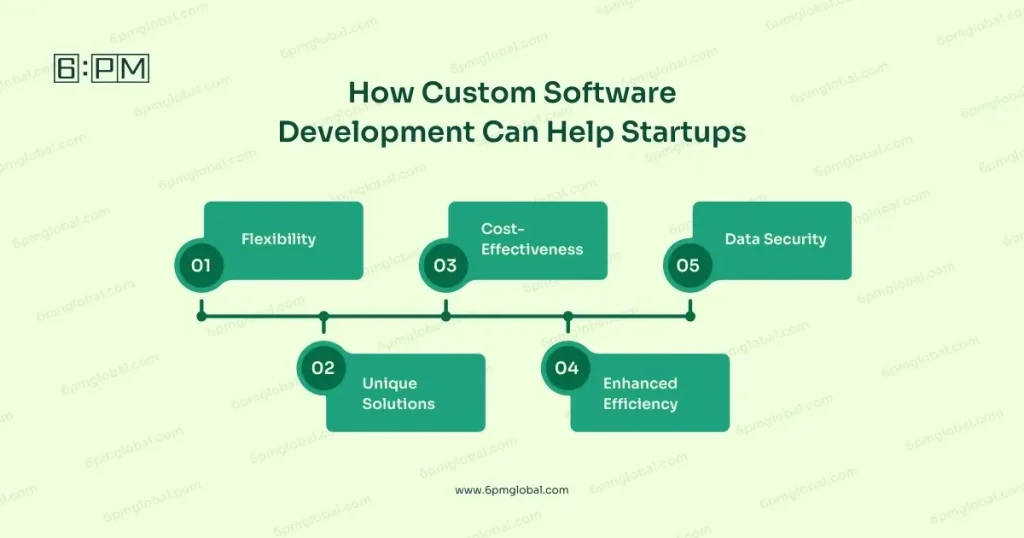
Flexibility
Well, startups need to be agile. Custom software allows us to grow easily as our customer base expands. I’ve seen how a flexible system lets me adapt features to match my business’s evolving demands.
Unique Solutions
Every startup is different. Custom software gives us a competitive edge by addressing our specific challenges. This means we can create unique experiences for our customers that truly set us apart from the competition.
Cost-Effectiveness
At first, custom software might seem expensive. However, it saves money in the long run. Unlike generic solutions that charge for unnecessary features, custom development focuses on what we actually need.
Enhanced Efficiency
With limited resources, maximizing productivity is needed. Custom software automates repetitive tasks and simplifies processes, allowing me to focus on what really matters—growing my business and serving my customers better.
Data Security
Protecting sensitive data breaches is needed today. In fact, the average cost of a data breach in the U.S. reached approximately $9 million in 2023. So, custom solutions can include strong security measures personalized to our needs. Plus, this ensures our data remains safe and builds trust with our users.
Related Article: Custom Software Solutions: Increase Productivity Upto 50%
10 Strategies for Custom Software Development for Startups
Beginning on the journey of custom software development requires a solid strategy. Here are some proper practices I’ve found helpful:
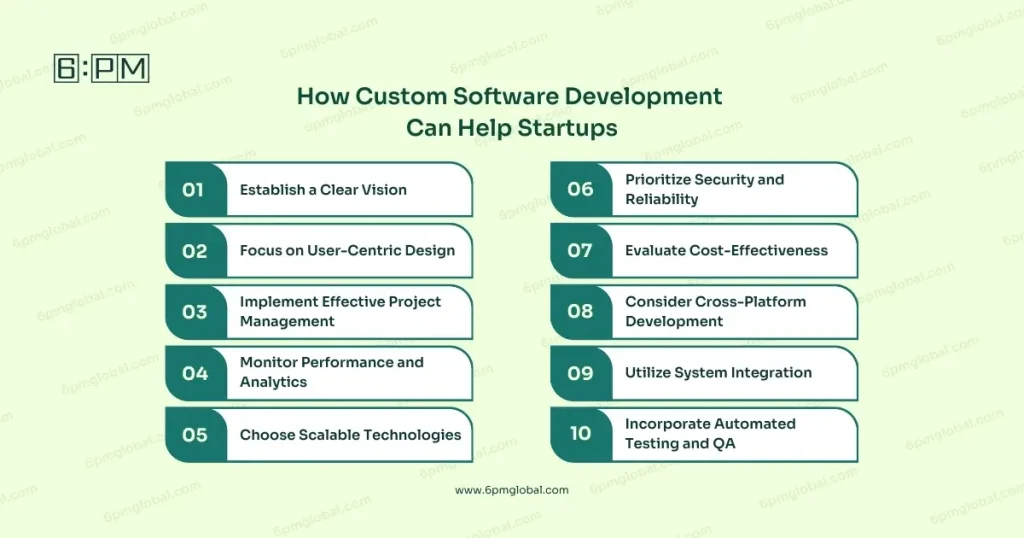
Establish a Clear Vision
Start by defining what you want to achieve with your software. This clarity keeps your team aligned and focused on the same goals. When everyone understands the vision, it’s easier to make decisions that support your startup’s objectives.
Focus on User-Centric Design
Always put the user experience first. Gather feedback from potential users early in the process. It helps refine your product into something they genuinely want and need. Studies say that 83% of consumers believe and are willing to pay more for a seamless user experience.
Moreover, prioritizing user needs ensures that your software resonates with your target audience.
Implement Effective Project Management
Use project management tools to keep your development organized and on track. Tools like Trello or Jira help manage tasks and timelines efficiently. Strong project management ensures that everyone knows their responsibilities which reduces confusion and delays.
Monitor Performance and Analytics
After launching your software, continuously track how users interact with it. Use analytics tools to gather data on user behavior. This information helps identify areas for improvement which allows you to make informed decisions about future updates.
Choose Scalable Technologies
Select technologies that allow easy scaling as your startup grows. Scalable solutions ensure that your software can handle increased demand without a complete overhaul. This flexibility is important for adapting to changing market conditions.
Prioritize Security and Reliability
Choose secure technologies to protect user data. Implementing strong security measures builds trust with your customers and protects sensitive information. Well, a reliable system is essential for maintaining user confidence in your product development.
Evaluate Cost-Effectiveness
Keep an eye on both initial costs and long-term maintenance expenses when selecting technologies. Well, 67% of CIOs say cost optimization for cloud-based or custom software is a top priority for their IT budgets in 2025. It’s important to balance quality with affordability. Thus, understanding the total cost of ownership helps you make better financial decisions for your startup.
Consider Cross-Platform Development
Developing software that works across various platforms ensures you reach a wider audience. Cross-platform solutions save time and resources while maximizing your potential user base. This approach expands accessibility and convenience for users.
Utilize System Integration
Integrating different app development can enhance workflow efficiency. By connecting various systems, you reduce manual data entry and simplify processes. This integration allows for smoother operations and better data management within your startup.
Incorporate Automated Testing and QA
Last but not least, regular testing is needed to catch bugs early in the development process. Automated testing saves time and ensures a smoother user experience upon launch.
Furthermore, prioritizing quality assurance helps deliver a reliable software product that meets user expectations from day one.
What to Do and What Not to Do for Your Startup
Here’s a handy table outlining essential dos and don’ts when you’re creating custom software:
| Do | Don’t |
| Plan Carefully | Don’t Rush Your Planning |
| Listen to Users | Don’t Ignore User Feedback |
| Test Frequently | Don’t Wait Until the End to Test |
| Communicate Clearly | Don’t Keep Information to Yourself |
| Be Flexible | Don’t Stick to the Original Plan |
| Plan for Growth | Don’t Ignore Scalability |
| Plan for Growth | Don’t Overspend or Make Unplanned Expenses |
| Provide Good Support | Don’t Neglect Customer Support |
Conclusion
Investing in custom startup software development has been one of the best choices for my startup. It helps us tackle our unique challenges and prepares us for future growth. By working with skilled developers who understand our vision, we can create strong solutions that lead to success.
If you want to improve your startup with custom software, now is the time to act! Find out the process and strategies of custom software development for startups and watch your ideas turn into products that truly connect with users.
If you have any questions or need help with expert tech guidance to get started, feel free to reach out. Let’s take this journey together!
FAQs
How long does it take to develop a custom software solution?
Development time depends on the project’s size and complexity. Simple projects may take a few months, while larger ones can take longer. Consulting with software developers can provide a clearer timeline for your specific startup project.
Who owns the custom software developed for me?
Once the project is completed and paid for, you own all aspects of the software, including source code and documentation. This ownership allows you to maintain and modify the software as needed.
Do you provide support after development?
Yes, many software development companies offer ongoing support after launching custom software. This support can include updates, maintenance, and troubleshooting to ensure the software continues to function well.
What technologies are used in the custom software development process?
Various technologies can be used depending on project requirements. Common choices include programming languages like Python or JavaScript, databases like MySQL or MongoDB, and frameworks like React or Angular for web applications.
How do I choose the right development team?
Look for a team with experience in your industry and a strong portfolio of past projects. Consider their communication style, technical skills, and ability to understand your business needs before making a decision.