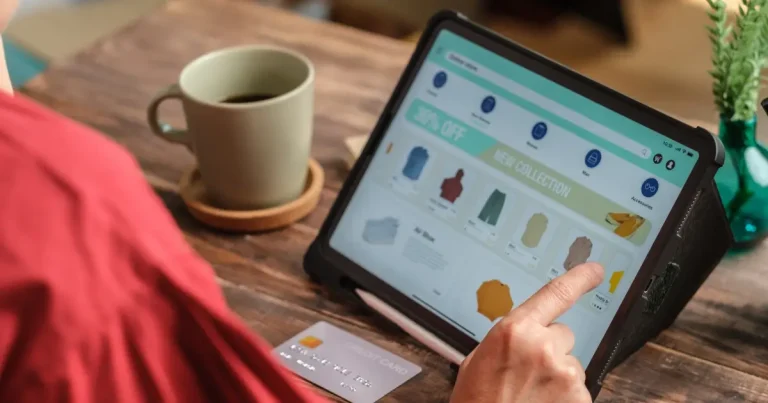


Are you trying to connect better with your customers and boost engagement? B2C app solutions are changing how businesses interact with consumers.
These apps offer a range of features, from personalized shopping experiences to instant customer support. They help your business connect with customers more effectively and stand out in a competitive market.
B2C app solutions will help you to build strong connections, with a smooth and easy experience that will keep your customers happy and loyal.
In 2024 the most downloaded shopping app hit almost 550 million downloads. This number alone shows how the b2c apps are taking over the app market.
In this guide, we’ll look at the benefits of B2C app solutions, share real-life examples of successful apps, and cover the top features to make your own app stand out. Ready to explore how business-to-customer apps can grow your business?
Let’s dive in!
What are B2C App Solutions?
B2C app solutions are digital tools that connect your business directly with customers. These apps offer quick and personalized services, products, or information. Whether it’s retail apps or apps for bookings and support, these platforms make interactions simple and keep customers engaged.
These apps aren’t just about convenience. They include features that elevate user experience, increase satisfaction, and build loyalty. Some standout and effective features of B2C apps include personalized user experiences, easy navigation, and secure payment options. They also offer real-time notifications, integrated customer support, loyalty programs, and social media connectivity.
Trends in B2C App Solutions
Staying updated on the latest B2C app trends can make your app more engaging and relevant for your users. Here is how these trends can elevate your app’s functionality and keep users coming back:
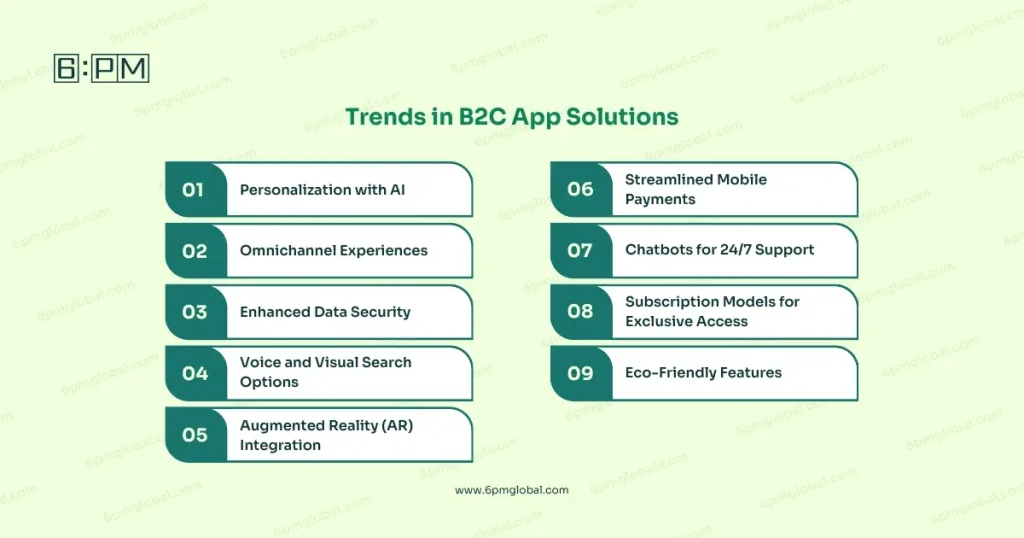
- Personalization with AI: AI helps you customize recommendations based on each user’s preferences. It delivers relevant content that keeps users engaged and encourages them to return to your app.
- Omnichannel Experiences: Provide a flawless experience across devices, letting users switch between mobile and desktop without missing a beat. This kind of smooth transaction strengthens brand loyalty.
- Enhanced Data Security: Strengthen your app’s security with data encryption and multi-factor authentication. It’s a great way to protect user information, build trust, and stay in line with privacy rules.
- Voice and Visual Search Options: Enable users to search by voice or image, helping them find what they need quickly without typing. These options improve convenience and user satisfaction.
- Augmented Reality (AR) Integration: Add AR features to allow users to try products virtually, such as furniture in their space or makeup shades on their faces, increasing purchase confidence.
- Streamlined Mobile Payments: Include payment options like digital wallets to simplify checkout. A fast, easy payment process increases cart checkout and boosts conversions.
- Chatbots for 24/7 Support: Use chatbots to provide instant answers to common questions or order updates, ensuring the users can receive help anytime they need.
- Subscription Models for Exclusive Access: Offer special content or features through subscriptions. Providing unique benefits encourages long-term loyalty and frequent app engagement.
- Eco-Friendly Features: You can support eco-conscious values with options like digital receipts and sustainable packaging details. It shows you care about the planet, and that really clicks with today’s consumers.
Benefits of Developing a B2C Mobile App
Developing a B2C mobile app can significantly speed up your business’s reach, customer engagement, and brand loyalty. Let’s have a look at how these applications can help you build stronger connections with your customers and promote growth:
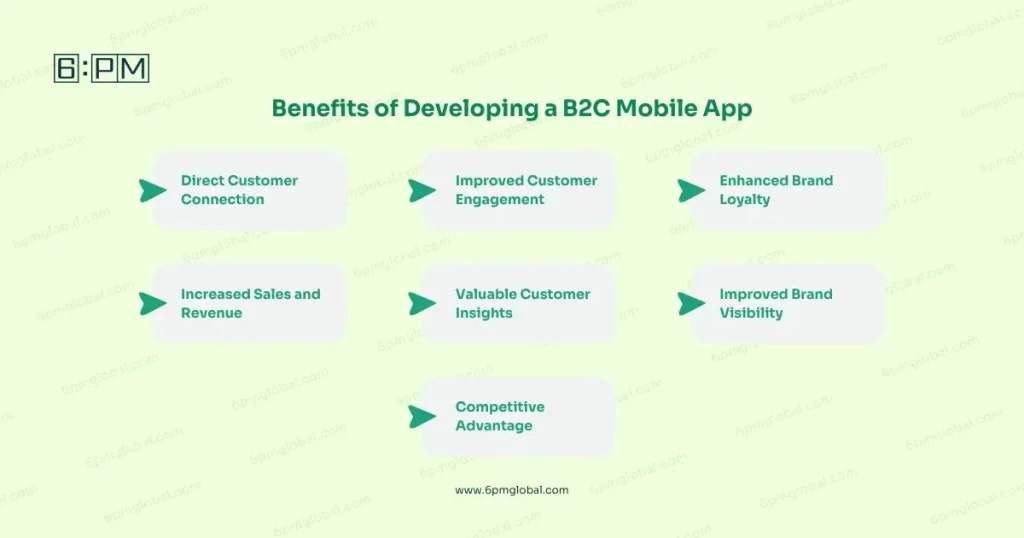
Direct Customer Connection
A mobile app provides a direct line to your customers, allowing you to share updates, exclusive offers, and notifications right to their devices. This constant presence strengthens relationships and keeps your brand visible.
Improved Customer Engagement
Apps make it easy to maintain regular interaction. Through push notifications specific content, you keep users engaged—whether they’re browsing products, checking out new features, or seeking support.
Enhanced Brand Loyalty
A mobile app offers an accessible platform for loyalty programs and rewards. By rewarding frequent users, you create a loyal community that supports and promotes your business.
Increased Sales and Revenue
Mobile app development will simplify the buying process, offer secure payments and quick checkouts. Using your app as a direct sales channel, you can encourage purchases and make it easy for customers to shop on the go.
Valuable Customer Insights
Apps gather useful data on customer behaviors, preferences, and trends. These insights help you make informed business decisions, refine products, and adjust marketing strategies to better meet customer needs.
Improved Brand Visibility
Having a mobile app will ensure your brand is front and center on customers’ devices, which they check multiple times daily. This visibility will keep your brand top-of-mind and easily accessible.
Competitive Advantage
In a mobile-first world, having a dedicated app sets you apart. Customers often prefer the convenience of apps, making it easier for them to stand out in a competitive market.
Real-Life Examples of B2C Solutions
B2C apps are changing how businesses connect with customers. These apps improve user experiences, making interactions simpler and more engaging across different industries.
Amazon
Amazon’s B2C focuses on creating a personalized shopping experience. By tracking user preferences and browsing history, it suggests products that match each user’s interests. This personalized approach makes it easier for users to find what they’re looking for quickly.
Features like “One-Click Purchase” and “Buy Again” make shopping fast and convenient, while secure payments build trust. Amazon’s blend of ease and customization has made it a top choice for online shopping, keeping users returning for more.
Netflix
Netflix’s app uses smart recommendations based on each user’s viewing habits. It helps users discover new shows and movies that fit their tastes. This makes browsing more enjoyable, as users see content they’re likely to enjoy right away.
Features like “Continue Watching” and offline downloads make watching easy and flexible. Netflix’s customized approach and simple navigation have set new standards in streaming, making content discovery both easy and engaging.
Starbucks
Starbucks focuses on loyalty and ease. The rewards program lets users earn points and redeem special offers, encouraging regular visits. Users can also order and pay ahead, saving time and making the coffee run simpler.
With location services, users can quickly find the nearest Starbucks, check hours, or see available services. Starbucks shows how B2C apps can drive loyalty by combining rewards, convenience, and a personal touch, making it easy for users to get their coffee just the way they like it.
If you’re aiming to develop an effective B2C app, consider partnering with 6PM Global. Their pre-vetted developers specialize in creating customized app solutions, ensuring your business can reach and engage your audience.
Best Practices to Ensure Effective B2C App Solutions
Creating a successful B2C app requires thoughtful design and a focus on the user experience. Here are some best practices to help you develop a B2C app that truly connects with your audience and meets business goals:
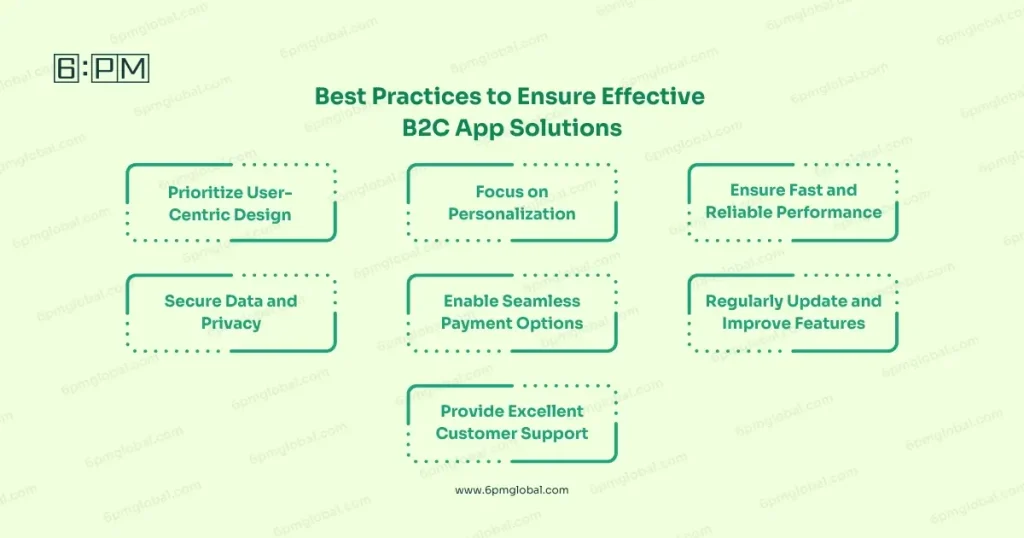
Prioritize User-Centric Design
Make the app intuitive and easy to navigate. Understand your target audience’s message, needs and preferences to design an experience that’s engaging and simple to use.
Focus on Personalization
Personalization is an important feature in B2C apps. Use data to tailor content, offers, and features to each user’s interests and past behavior. Personal touches increase customer satisfaction and encourage loyalty.
Ensure Fast and Reliable Performance
Users expect quick load times and smooth interactions. Optimize your app for performance to reduce load times and prevent lagging, as performance issues can drive users away.
Secure Data and Privacy
Build trust by prioritizing data security. Implement encryption, regular updates, and secure data practices to protect user information, which is essential for long-term app success.
Enable Seamless Payment Options
Integrate secure and varied payment methods within the app. Offering flexible payment options, like credit cards, digital wallets, and payment apps, improves user convenience and boosts sales.
Regularly Update and Improve Features
Stay relevant by continuously updating the app’s features based on user feedback and market trends. Regular updates also help maintain app security and performance.
Provide Excellent Customer Support
Users appreciate accessible support channels. Include options for live chat, FAQs, or chatbots to ensure users receive timely assistance, which strengthens their overall experience with the app.
Conclusion
To sum up, developing successful B2C app solutions is a powerful way to strengthen customer connections in the current digital era. By focusing on intuitive design, secure data handling, and responsive support, your app becomes an essential part of the customer journey and builds lasting brand loyalty.
Ultimately, embracing best practices for app development helps your B2C solution stay relevant and impactful. As user needs evolve, being adaptable and attentive to feedback ensures that your app continues to engage customers effectively.
A well-designed B2C app goes beyond being just a platform. It acts as a main channel for connecting with customers, improving their experience, and driving growth for your business.
FAQs
What’s the typical maintenance cost for a B2C app after launch?
Maintenance costs often range from 15-20% of the initial development cost annually. This includes updates, bug fixes, server maintenance, and additional feature enhancements as needed. A clear maintenance plan helps manage costs and keeps the app functioning optimally.
What kind of support is available after launching a B2C app?
Most development providers offer post-launch support, which can include bug fixes, performance monitoring, updates, and security patches. It’s important to check if ongoing support plans are available, as they ensure the app continues to perform smoothly and remains secure over time.
How long does it take to develop a B2C app?
Development time varies with the app’s complexity. Simple apps might take around 3-6 months, while apps with advanced features or customizations can take 9-12 months or more. Clear planning and defined requirements are crucial to streamlining the timeline effectively.
Can a B2C app integrate with my existing CRM system?
Yes, many B2C apps can integrate seamlessly with CRM and other backend systems, allowing for smooth data flow and improved customer relationship management. Integrations enhance customer data management and help personalize user experiences for better engagement.
What’s the best way to measure the success of a B2C app?
Success can be evaluated using metrics like user engagement, retention rates, downloads, and revenue. Additionally, gathering customer feedback and analyzing usage data offer valuable insights for continuous app improvement.