


You’ll be glad to know that the companies that track software development KPIs are 2.5 times more likely to complete projects on time and within budget. Well, these metrics are needed to ensure projects align with business goals and run efficiently.
Some of the best software KPIs include Cycle Time, Code Quality, and Deployment Frequency. These indicators help teams measure productivity, maintain high standards, and ensure rapid delivery.
Read on to find out the importance, benefits, and best practices of software development KPIs. This blog will guide you through choosing the right KPIs and highlight ten essential metrics to track.
Let’s start, shall we?
What are Software Development KPIs?
Software Development KPIs (Key Performance Indicators) are measurable values that show how well a company meets its business goals in the development process. They evaluate the efficiency, effectiveness, and quality of software projects.

Moreover, KPIs help track progress, spot problems, and make sure that projects align with your business objectives. These indicators are necessary for managing and improving the development process.
At the same time, they provide insights into productivity, highlight areas needing improvement, and ensure that the team meets deadlines and quality standards. Thus, by using KPIs, you can better manage their resources, simplify workflows, and achieve better results in their software projects.
Importance of Software Development KPIs
Software KPIs are important for managing and improving your projects. They provide valuable insights into various aspects of the development process. Here are some reasons why they are needed:
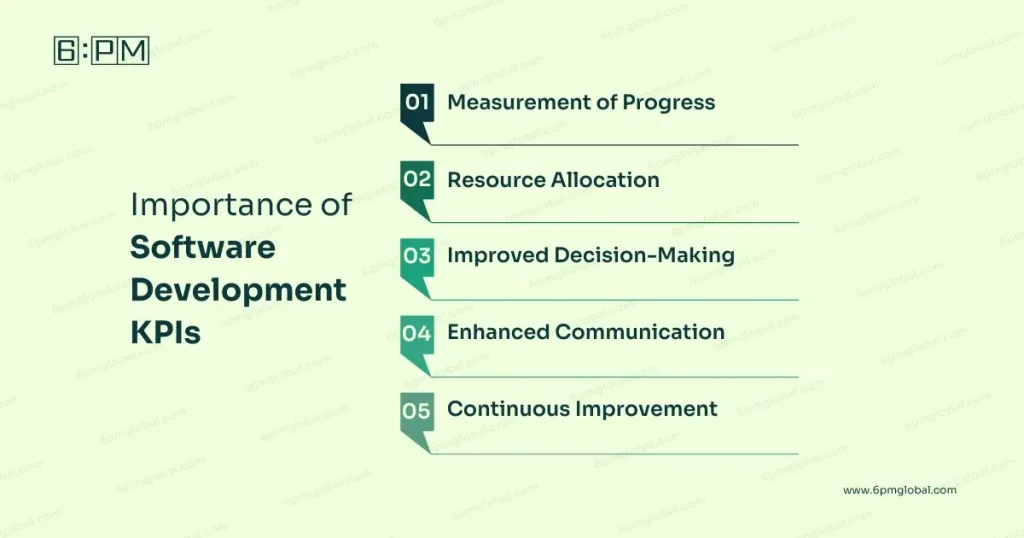
Measurement of Progress
KPIs clearly show the development team’s performance and project status. They help track whether the project is moving in the right direction and meeting deadlines.
Plus, the measurement ensures that any deviations from the plan are identified early, allowing for timely adjustments.
Resource Allocation
Understanding KPIs helps identify areas that need more attention or resources. Also, determining specific parts of the project that may lag allows resources to be allocated more efficiently.
Well, this targeted approach makes sure that efforts are focused where they are most needed, optimizing overall project performance.
Improved Decision-Making
KPIs provide data-driven insights that are crucial for making informed decisions. They highlight trends, progress, and potential issues, enabling better strategic planning.
So, with accurate data, managers can make better choices about project direction, resource allocation, and process improvements.
Enhanced Communication
KPIs enrich communication within the development team and with stakeholders by providing concrete data on project status. They make it easier to convey progress, challenges, and achievements.
This transparency also builds trust and ensures everyone is on the same page, maintaining a collaborative work environment.
Continuous Improvement
Regular tracking of KPIs encourages a culture of continuous improvement. By consistently monitoring these indicators, teams can identify areas that need enhancement and implement changes.
Furthermore, the ongoing process of evaluation and adjustment leads to better performance and higher-quality outcomes.
Benefits of KPIs for Software Development
Software development KPIs provide lots of advantages that help improve your project outcomes. Let’s find out the benefits:

Optimization of Productivity
First, KPIs help identify inefficiencies and simplify workflows. By analysing performance data, teams can pinpoint areas that slow progress and implement changes to enhance efficiency.
This optimization leads to faster development cycles and better resource use, ultimately improving productivity.
Alignment with Business Goals
Now, KPIs ensure that development efforts align with the company’s strategic objectives. By tracking specific metrics, your teams can stay focused on goals that matter most to the business.
Hence, the alignment helps in prioritizing tasks and making decisions that support overall business success.
Increased Customer Satisfaction
Well, by focusing on relevant KPIs, the developer team can deliver higher-quality products that meet customer needs. These metrics help ensure that the final product is reliable, user-friendly, and meets customer expectations.
Note that satisfied customers are more likely to become repeat users and advocates for the product.
Risk Management
Do you know that KPIs help in the early detection of potential issues, allowing for timely mitigation? Teams can identify problems before they escalate, reducing the risk of project delays or failures by monitoring key indicators.
The approach to risk management expands your project’s stability and success.
Enhanced Team Performance
Remember that regularly tracking KPIs creates a culture of accountability and continuous improvement. Teams can see how their performance meets goals and standards, motivating them to improve.
This transparency and focus on measurable outcomes drive better individual and collective performance as well.
Cost Efficiency
Lastly, KPIs help manage project budgets by identifying areas where costs can be reduced without compromising quality.
So, by monitoring financial metrics, teams can make cost-effective decisions and avoid unnecessary expenses. It also ensures that your projects stay within budget while still achieving high standards.
How to Choose the Correct Software KPIs
Selecting the right KPIs for software development is important for effective project management. Let’s see the steps to help you choose the correct KPIs:
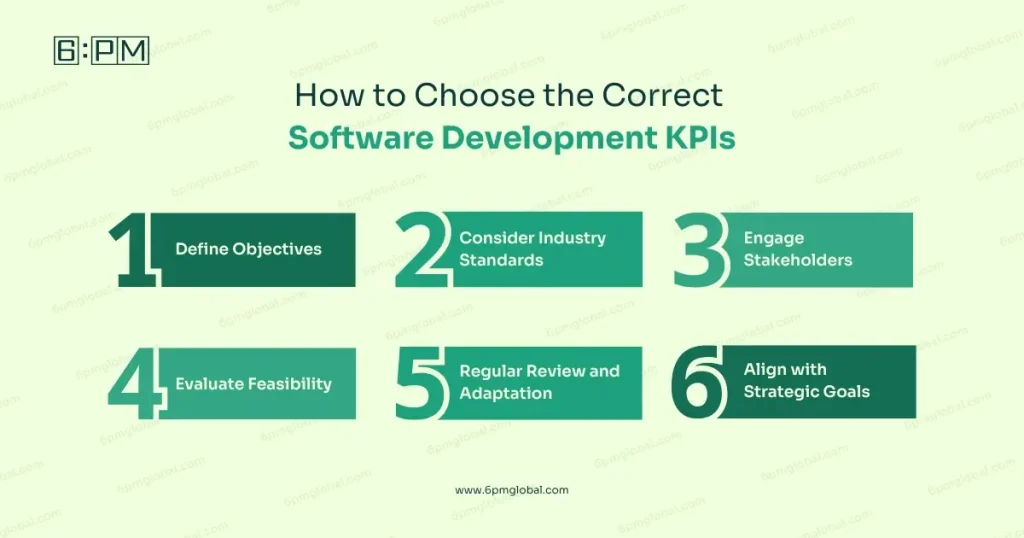
Define Objectives
Start by clearly identifying what you want to achieve with your KPIs. Determine the specific goals and outcomes you are looking for, such as improving productivity, ensuring quality, or meeting deadlines.
Having well-defined objectives will guide you in selecting the most relevant KPIs that align with your project’s goals.
Consider Industry Standards
Look at industry benchmarks and best practices to choose KPIs that are widely recognised and valuable. Research what other successful companies in your field are tracking.
It’s because using industry standards makes sure that your KPIs are relevant and provide meaningful comparisons to others in your industry.
Engage Stakeholders
Involve all relevant parties in the selection process to ensure buy-in and alignment. It includes software development team members, project managers, and other stakeholders. Engaging stakeholders ensures that the chosen KPIs reflect the interests and concerns of everyone involved.
This leads to better collaboration and commitment as well.
Evaluate Feasibility
Ensure that you have the necessary data, resources, and tools to measure the chosen KPIs. Assess whether you can realistically collect and analyse the data required for each KPI.
If certain metrics are too difficult or costly to track, consider alternative KPIs that are more feasible.
Regular Review and Adaptation
Continuously review and adjust KPIs as business needs and project requirements evolve. The relevance of KPIs can change over time, so it’s important to regularly evaluate their effectiveness and make necessary adjustments.
Well, the ongoing review process helps ensure that your KPIs remain aligned with your project’s goals and current conditions.
Align with Strategic Goals
Ensure that the selected KPIs are aligned with the overall strategic goals of the organization. It means choosing KPIs that not only measure project performance but also contribute to the broader objectives of the business.
Alignment with strategic goals makes sure that the KPIs drive meaningful progress and support long-term success.
12 Best Software Development Key Performance Indicators
Tracking the right Key Performance Indicators (KPIs) is essential for successful software development. KPIs provide insights into various aspects of the development process that help teams improve efficiency, quality, and customer satisfaction.
Here are 12 of the best KPIs:
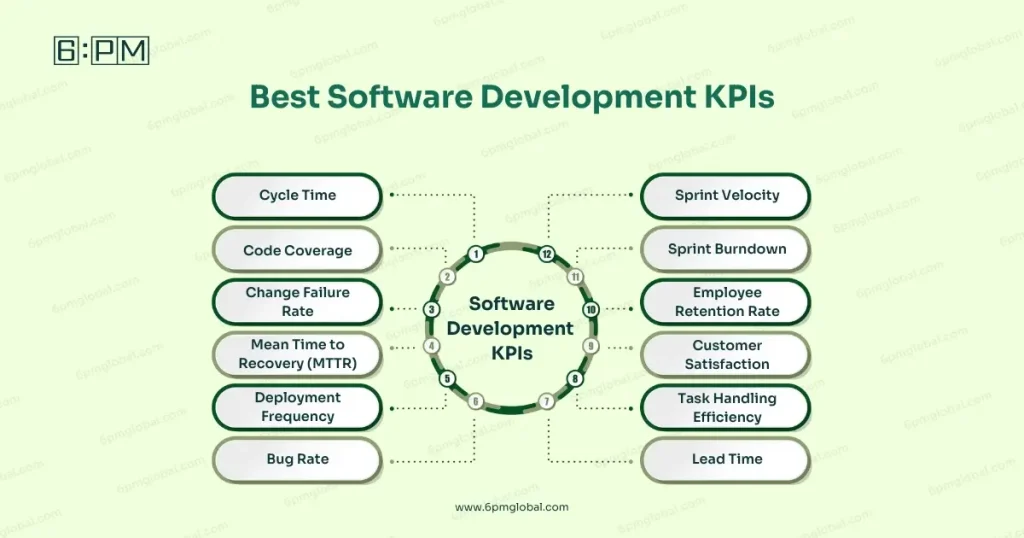
1. Cycle Time
Measures the time taken to complete a task from start to finish. This KPI helps teams understand how long it takes to move a piece of work from the initial stage to completion.
Also, shorter software development lifecycle times often indicate more efficient processes and faster delivery of features.
2. Code Coverage
The percentage of code covered by automated tests ensures quality and reduces bugs. High native code coverage means that more of the codebase is tested, leading to fewer bugs and more reliable software.
So, it’s a key indicator of the robustness of the testing process.
3. Change Failure Rate
The percentage of deployments causing a failure in production. This KPI highlights the stability and reliability of the deployment process. Lower change failure rates suggest that deployments are more successful and that the development process produces stable code.
4. Mean Time to Recovery (MTTR)
The average time to restore service after a failure. MTTR measures how quickly the team can recover from incidents and return to normal operations. A shorter MTTR indicates efficient problem-solving and effective incident management.
5. Deployment Frequency
The frequency with which code is deployed to production reflects the speed of delivery. Also, frequent deployments suggest a simple process and the ability to deliver updates and new features quickly.
So, it’s an important metric for assessing the agility of the development team.
6. Bug Rate
The number of bugs found during testing phases. This KPI helps track the quality of the code being produced. A high bug rate indicates potential issues with the development process, while a lower bug rate suggests better code quality and more effective testing.
7. Lead Time
The time from starting development to deployment. Lead time measures the efficiency of the software development process from the initial work to the delivery of the final product.
Plus, shorter lead times indicate a more efficient process and quicker delivery of value to customers.
8. Task Handling Efficiency
How effectively tasks are completed within the development cycle. This KPI assesses the team’s productivity and ability to manage and complete tasks. High task-handling efficiency means that the team is working effectively and meeting deadlines.
9. Customer Satisfaction
Measures how satisfied customers are with the software product. This KPI is crucial for understanding the end-user experience and the success of the product in meeting customer needs.
High customer satisfaction indicates that the software is delivering value and meeting expectations.
10. Employee Retention Rate
The rate at which development team members stay with the organization. This KPI is important for understanding team stability and satisfaction. High retention rates suggest a positive work environment and good employee engagement, which are critical for long-term success.
11. Sprint Burndown
Tracks the amount of work remaining in a sprint. This KPI helps teams visualize their progress and predict if they will complete all planned tasks within the sprint. A consistent sprint burndown indicates effective sprint planning and task management.
12. Sprint Velocity
Measures the amount of work a team can complete in a sprint. The KPI helps in estimating the team’s capacity for future sprints. Higher sprint development velocity suggests improved efficiency and the ability to deliver more features or fixes in a set time frame.
Best Practices to Implement Software Development KPIs
Implementing software KPIs effectively can significantly improve software development project outcomes. Here are the best practices to follow:
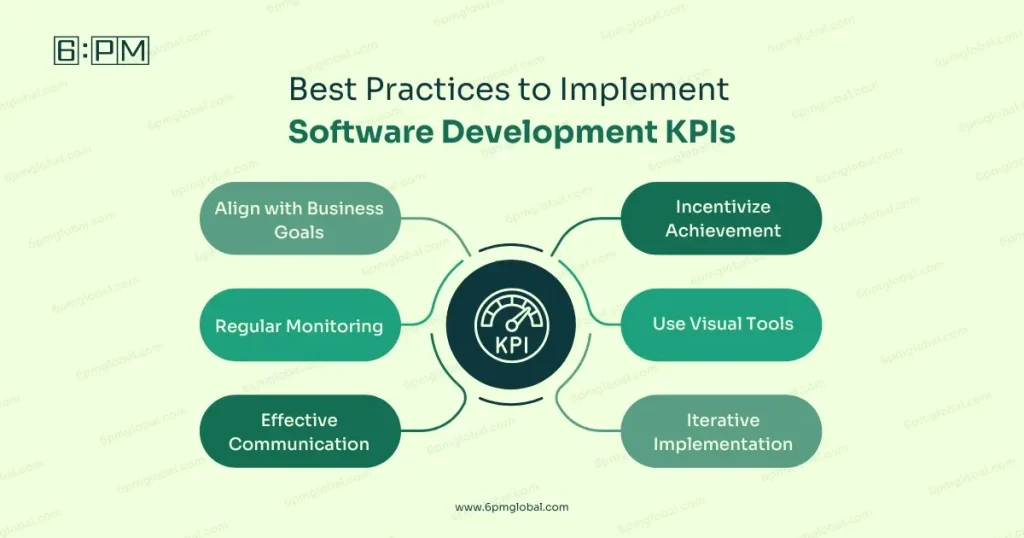
Align with Metric and Business Goals
Ensure KPIs are directly linked to business objectives. The alignment guarantees that the metrics tracked are relevant and support the company’s strategic goals.
Also, by focusing on KPIs that matter to the business, teams can prioritize their efforts and make a more significant impact.
Regular Monitoring
Keep track of KPIs regularly to identify trends and make timely adjustments. Consistent monitoring allows for early detection of issues and opportunities for improvement. This approach helps maintain project momentum and ensures that goals are met more efficiently. At 6PM, they provide you with a Fractional CTO who helps you better monitor and create KPIs. Contact now!
Effective Communication
Make sure all team members understand the KPIs and their importance. Clear communication about what each KPI measures and why it matters promotes a sense of ownership and accountability.
When everyone is on the same page, collaboration is enhanced, and collective effort is driven toward achieving targets.
Incentivize Achievement
Recognize and reward teams for meeting KPI targets to motivate continuous improvement. Positive reinforcement encourages teams to strive for excellence and maintain high performance.
Incentives can range from public acknowledgement to tangible rewards, creating a motivating environment.
Use Visual Tools
Employ dashboards and charts for easy visualization and interpretation of KPIs. Visual tools make it simpler to grasp complex data and quickly identify patterns and trends.
Furthermore, they expand understanding and enable better decision-making by presenting information in a clear and accessible manner.
Iterative Implementation
Introduce KPIs gradually to allow the team to adapt and refine them as needed. Starting with a few key metrics and expanding over time helps teams adjust to the new tracking system without feeling overwhelmed.
This iterative approach makes sure that KPIs are effectively integrated into the workflow and can be optimized for best results.
The Bottom Line
Software development KPIs are essential for measuring the success of development projects and ensuring they align with business goals.
By choosing the right KPIs, regularly monitoring them, and following best practices for implementation, you can drive continuous improvement, optimise productivity, and deliver high-quality software products that satisfy customers.
Remember that embracing a data-driven approach to software development not only enhances performance but also contributes to long-term business success.
Good luck!
FAQs
What role do stakeholders play in selecting KPIs?
Engaging stakeholders in selecting KPIs makes sure that the metrics reflect the interests and concerns of everyone involved. The collaboration leads to better alignment with business goals, greater buy-in, and more effective tracking and improvement efforts.
Why is regular review and adaptation of KPIs necessary?
Regular review and adaptation of KPIs ensure they remain relevant and aligned with evolving business needs and project requirements. This continuous evaluation helps teams adjust their focus and strategies to achieve better results and maintain project success.
How do KPIs help in achieving faster delivery times?
By monitoring KPIs like Cycle Time and Deployment Frequency, teams can identify bottlenecks and streamline processes. The focus on efficiency helps reduce delays and speeds up the delivery of new features and updates to customers.