


Having financial software that fits your business perfectly with no extra features and no important functions missing sounds so interesting, isn’t it? Well, your financial systems could quickly grow with your business, giving you more control with custom financial software development.
In the finance industry, where accuracy and security are critical, using off-the-shelf software can hold your business back. Custom solutions are built to match your specific needs. They also help you stay ahead of the market while meeting important compliance and security requirements.
In this blog, we will explore the benefits, steps, and challenges of building custom financial software and why it’s the right choice for businesses wanting to improve financial operations and efficiency. Let’s find out how custom solutions can transform your financial strategy.
What is Custom Financial Software Development?
Custom financial software development is the process of creating software specifically customized to meet the unique needs of financial institutions. This includes banks, investment firms, and fintech startups.
According to the Business Research Company, the custom software market is expected to reach $105.02 billion by 2028, growing at a rate of 23.7% annually.
Custom solutions enhance efficiency, security, and compliance. It basically allows businesses to simplify operations effectively.
Therefore, unlike off-the-shelf software, custom solutions can adapt as business requirements change which provides a significant competitive advantage in the the financial sector.
Common Types of Custom Financial Software
Depending on the needs, businesses can develop several types of custom financial software. Here are some of the most common types:
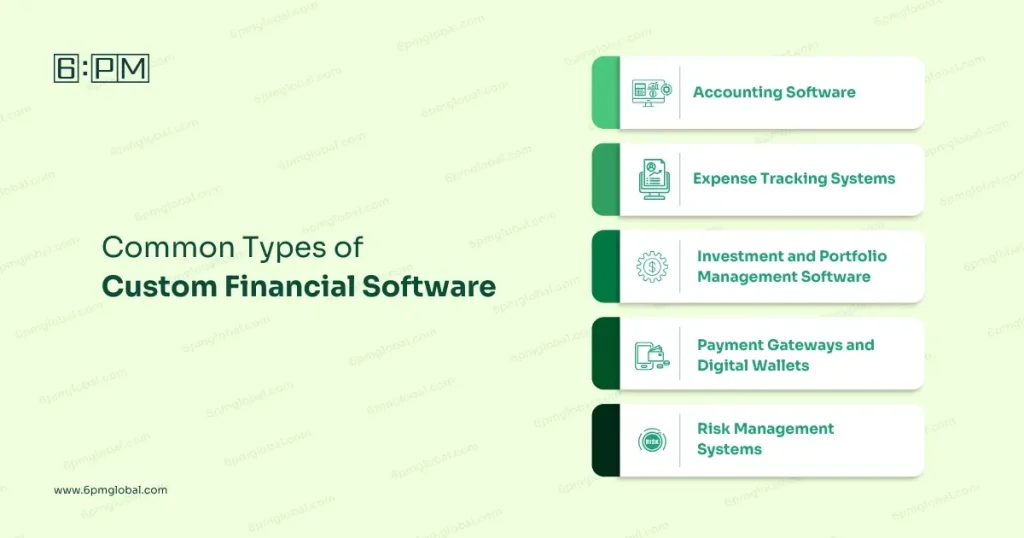
Accounting Software
Custom accounting software is designed to help businesses manage their finances effectively. It simplifies tasks like tracking expenses, managing invoices, and generating reports. This software ensures accurate financial records and compliance with regulations.
Thus, by automating these processes, businesses can save time and reduce errors in their financial management.
Expense Tracking Systems
Expense tracking software automatically monitors and manages business expenses. It helps organizations keep an eye on spending and identify areas for cost savings. According to recent data, small business owners lost an average of $3,285 in 2024 due to poor expense tracking.
With detailed expense reports, companies can make informed decisions about their budgets. Moreover, this software reduces human errors and simplifies the process of tracking daily expenditures.
Investment and Portfolio Management Software
Investment management software is used by banks and businesses to oversee investments and analyze portfolios. It provides tools to track real-time market data and assess performance.
Also, custom solutions can include advanced financial analytics tailored to specific investment strategies. It helps firms optimize their investment decisions and manage risks effectively.
Payment Gateways and Digital Wallets
Custom payment solutions enable businesses to process transactions securely, whether online or in-store. Payment gateways help with smooth payment processing, while digital wallets offer customers a safe way to store and transfer money. These solutions enhance customer experience by providing convenient payment options while ensuring data security during transactions.
Risk Management Systems
Last but not least, risk management software helps companies identify and analyze financial risks. It assesses potential threats and calculates their impact on the business.
So, by providing recommendations for risk mitigation, this software helps organizations make informed decisions. Custom risk management systems improve overall financial stability by proactively addressing possible challenges as well.
5 Benefits of Custom Financial Software Development Services
Custom financial software solutions offer several advantages that can significantly improve your business operations. Here are some key benefits:

1. Custom-Built Solutions for Your Business
Software development for financial services is built to match your specific business needs. It ensures that all essential features are included without the unnecessary elements found in off-the-shelf solutions.
2. Improved Security
Financial custom software can include advanced security features that protect sensitive financial data. Businesses in the financial sector, fintech businesses, and financial institutions are strict with security and privacy rules, making it even more important.
3. Scalability
As your business grows, custom software can easily scale to meet new demands. Whether handling more data, users, or various financial processes, custom solutions can adapt to your company’s evolving needs.
4. Integration with Existing Systems
Custom financial solutions can be developed to work seamlessly with the systems you already use. The system can ensure smooth operations, minimize doubt during execution, and be a top-notch financial software.
5. Long-Term Cost Efficiency
While custom fintech software development may have a higher cost, it can lead to long-term savings. You won’t need to pay for licenses, updates, or features that you don’t use, and the software will be more efficient for your specific needs.
5 Steps to Build Custom Financial Software
The process of developing financial software involves important steps to ensure it meets your business’s specific needs. Following these steps will help you create secure, compliant, and durable software.
Here are some simple and basic steps:

Identify Business Requirements
The very first step is data analytics and understanding your business’s financial processes. Identify the challenges and gaps in current systems that need to be addressed with financial software developers.
Compliance and Regulatory Requirements
Next, you need to ensure the software meets financial regulations and legal requirements, such as GDPR, PCI, DSS, or KYC. Compliance with industry standards is critical to avoid legal issues and protect your business.
Choosing a Development Team
Decide whether to build the software in-house or you want to outsource to a development company. Look for a team with experience in financial service and a strong track record of successful projects like banking software.
Select the Right Technology Stack
Always choose the right technology stack that will ensure security, scalability, and performance. The technology used should support the features you need and should guarantee smooth future updates.
Design and User Experience
The design primarily focuses on creating a user-friendly interface that simplifies complex financial tasks. A well-designed user interface can improve efficiency and enhance the overall user experience.
Why Custom Financial Software Development is Right for You
When developing custom financial software, there are several important factors to remember. These considerations not only ensure the software is effective but also highlight why custom financial software development is the right choice for your business:

Regulatory Compliance
Following financial regulations such as GDPR, PCI DSS, and KYC is crucial in the financial sector. Custom software allows businesses to build compliance directly into the system. It ensures that all legal standards are met and reduces the risk of penalties.
Security That Meets Your Specific Needs
Off-the-shelf software often comes with generic security features, which may not fully protect your business. On the other hand, custom financial technology ensures your sensitive financial data is secure with your specific security needs in mind.
Scalability for Future Growth
As your business grows, your software should be able to grow with it. Businesses mainly look for flexible, future-proof solutions. Custom solutions allow you to handle increasing data, users, and transactions, ensuring long-term efficiency.
A Better User Experience
A custom-built solution means the user interface is tailored to your team’s needs, making it easier for employees to navigate the system and perform tasks more efficiently. A user-friendly experience is key to maximizing productivity and often outperforms off-the-shelf alternatives.
Integration with Your Existing Systems
One of the greatest advantages of custom financial software is its ability to integrate seamlessly with the systems you already use. Custom solutions ensure consistent operations, payment gateways, CRM tools, or accounting software.
5 Challenges of Custom Financial Software Development
While custom financial software development offers great advantages, it’s important to recognize the challenges that come with it.
Understanding these obstacles will help businesses make informed decisions and prepare for long-term commitments.

Higher Initial Costs
Developing custom software requires a significant amount of investment. Development costs can be a hurdle for smaller businesses with limited budgets. However, the long-term cost savings and efficiency gained often outweigh the initial expense.
Longer Development Time
Creating a custom solution from scratch takes more time compared to just using off-the-shelf software. The development process includes research, design, development, testing, and deployment, which can take over several months.
Ongoing Maintenance
To remain up-to-date and secure custom software requires continuous maintenance. It involves regular updates, bug fixes, and potential feature enhancements, which can add to operational costs.
Complexity in Development
Over-customization can lead to complex software that may be difficult to maintain or upgrade in the future. It is crucial to have a balance between customization and simplicity to avoid unnecessary complications.
Dependence on Developers
Businesses can become dependent on their development team for future updates and support. Making sure you have a reliable fintech development partner is a must.
How to Choose the Right Development Partner
Choosing the right financial software development company is necessary for the success of your custom financial software development project. The right team can turn your vision into reality while avoiding common pitfalls.
Here are some main factors to consider:
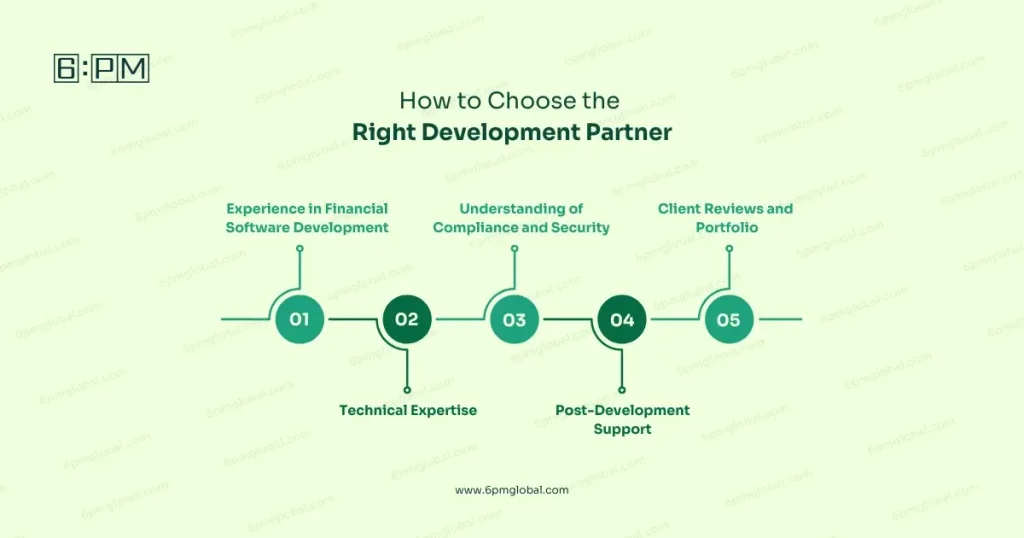
- Experience in Financial Software Development: Look for a team with proven experience in building financial software. They should understand industry-specific requirements, such as compliance with regulations and handling sensitive financial data.
- Technical Expertise: Your development partner should be skilled in the latest technologies and frameworks that ensure security, scalability, and performance. Make sure they have the technical knowledge to build software that can grow with your business.
- Understanding of Compliance and Security: The team should have a deep understanding of financial regulations, including GDPR, PCI DSS, and KYC. They must be able to build solutions that meet these standards.
- Compliance and Security: The development team must understand important financial regulations like GDPR, PCI DSS, and KYC. They should know how to create software solutions that comply with these rules. According to a study, compliance costs in the UK financial services sector rose by 12% in 2023 which highlights the need for effective compliance measures.
- Post-Development Support: Ensure a reliable software development partner offers ongoing support after launching the software, including regular maintenance, updates, and bug fixes. It’s important to have a team that can quickly address issues or new requirements, ensuring the software’s reliability.
- Client Reviews and Portfolio
Review their past projects and client feedback to ensure they have a track record of delivering high-quality service. Ask for case studies or specific examples of similar projects they’ve completed to display their expertise.
Real-Life Examples of Custom Financial Software Development (Fintech).
Many businesses have successfully used custom financial software development to improve their operations. For example,
JP Morgan Chase – AI-Powered Trading Platform
JP Morgan Chase developed an automated trading system that uses artificial intelligence to improve trading speed and accuracy. The custom solution reduced manual work and enhanced security.
PayPal – Custom Payment System
Built a secure payment gateway to handle millions of transactions each day. The custom system helped PayPal scale its services while meeting global security and compliance standards.
Companies are becoming more attracted to building custom financial software because it can address specific business needs and improve operational efficiency.
Additionally, financial software development services now assist in building mobile apps for secure payments and real-time financial tracking, giving customers flexibility and control.
Conclusion
In summary, custom financial software development helps businesses build software that fits their specific needs. It offers better security, can evolve with your business, and works well with other systems.
While it may cost more and take longer to develop than ready-made software. The long-term benefits like saving time, improving security, and being more flexible—make custom finance software a smart choice.
By selecting the right development team, your business can build financial software that solves current problems and prepares for future growth. In the end, custom financial software is the best way to stay competitive and efficient in the fast-changing world of finance. Partner with 6PM Global to develop your custom financial software to your unique needs. Contact us today.
FAQs
How do I choose between in-house and outsourced development for custom financial software?
The choice depends on your budget, timeline, and available expertise. In-house development offers more control, while outsourcing provides access to experienced developers and can be more cost-effective if you lack specialized in-house skills.
How can custom financial software improve security?
Custom financial software enhances security through tailored features like encryption, multi-factor authentication, and regular updates. These measures protect sensitive data from cyber threats and ensure compliance with regulations which makes it safer for both businesses and their clients.
Can custom financial software support mobile devices?
Yes, custom financial software can be designed to support mobile devices. It allows employees and customers to access mobile banking features from smartphones and tablets while enhancing flexibility and productivity on the go.
Will I need in-house IT staff to manage custom financial software?
Not necessarily. Many businesses outsource ongoing maintenance and support to the development company. However, having in-house IT staff can help address minor issues and work closely with the developers when more complex updates are needed.
Is it possible to track real-time financial data with custom software?
Absolutely! Custom financial software can be designed to track and display real-time financial data. It also enables quicker decision-making and provides up-to-date insights, expenses, and other key metrics.
Is custom financial software scalable for future growth?
Yes, custom financial software is designed to be scalable. It can adapt to your business’s changing needs by adding new features or accommodating more users without losing performance. This flexibility supports long-term growth and evolving market demands.
How long does it take to develop custom financial software?
The time to develop custom financial software varies based on complexity and features. Generally, it can take several months to over a year. Proper planning and clear communication with the development team can help speed up the process.
What are the costs associated with custom financial software development?
Costs for custom financial software depend on factors like project size and complexity. While it may be more expensive than ready-made solutions, the long-term benefits often justify the investment, saving money over time.
How do I choose the right development team for my project?
To choose the right development team, look for experience in financial software, strong communication skills, and a good portfolio. Check reviews and ask for references to ensure they understand your needs and can deliver quality results.