


Did you know that 64% of companies now outsource their entire software development? Well, working remotely from different countries, offshore developers have become game-changers in this trend.
Moreover, offshore developers offer significant benefits like reduced operational costs, access to specialized talent, and round-the-clock development due to different time zones. This makes them a preferred choice for many businesses.
Curious about how these developers can help your business thrive? Read on to discover the differences between offshore, onshore, and nearshore developers, the challenges involved, and expert tips for successfully hiring offshore talent.
Let’s buckle up!
What is Offshore Development?
Offshore development is outsourcing software development tasks to a team or company in a distant country, usually far from the client’s location. Unlike nearshoring, which involves neighboring countries, offshore development typically involves teams from regions like Eastern Europe, Asia, or Latin America.
This approach allows businesses to hire skilled developers at a lower cost due to differences in living expenses. Offshore development is attractive because it offers a broad talent pool, reduces operational costs, and provides round-the-clock productivity due to time zone differences.
Therefore, companies can benefit from high-quality services while maintaining budget-friendly solutions. This makes offshore development a popular choice for businesses worldwide.
Who are Offshore Developers?
Offshore developers are software engineers, coders, and IT professionals working remotely for other countries’ businesses. Typically, they are part of dedicated teams provided by outsourcing agencies.

These developers bring specialized technical skills and problem-solving abilities to handle tasks like coding, software design, testing, and maintenance. Plus, they can work on both long-term projects or short-term tasks, depending on what your business needs.
Furthermore, they play a great role in helping companies complete development projects efficiently and affordably. It makes them a valuable resource for businesses trying to optimize costs while accessing global talent.
Overall, offshore developers provide high-quality services from regions where the cost of hiring is lower, offering companies worldwide a strategic advantage.
Onshore vs. Nearshore vs. Offshore Development
Understanding the differences between these outsourcing models is important for selecting the best approach for your business. Let’s look at this table:
| Onshore Development | Nearshore Development | Offshore Development | |
|---|---|---|---|
| Location | The same country as your business | Neighboring countries or the same region | Distant countries (e.g., Asia, Eastern Europe) |
| Cost | High | Moderate | Low |
| Time Zone Difference | None | Minimal | Significant |
| Cultural Alignment | Strong | Moderate | Lower |
| Pros | Zero time zone difference, easy communication | Cost-effective with easier real-time collaboration | Most cost-effective access to specialized skills |
| Cons | The most expensive option due to higher labor costs | Limited talent pool, some time zone differences | Communication challenges, time zone misalignment |
Benefits of Hiring an Offshore Development Team
Offshore software developers offer several advantages that make them popular for businesses looking to optimize their development process. From cost savings to faster project delivery, offshore teams provide a strategic edge.
Below are the benefits of hiring offshore software developers:
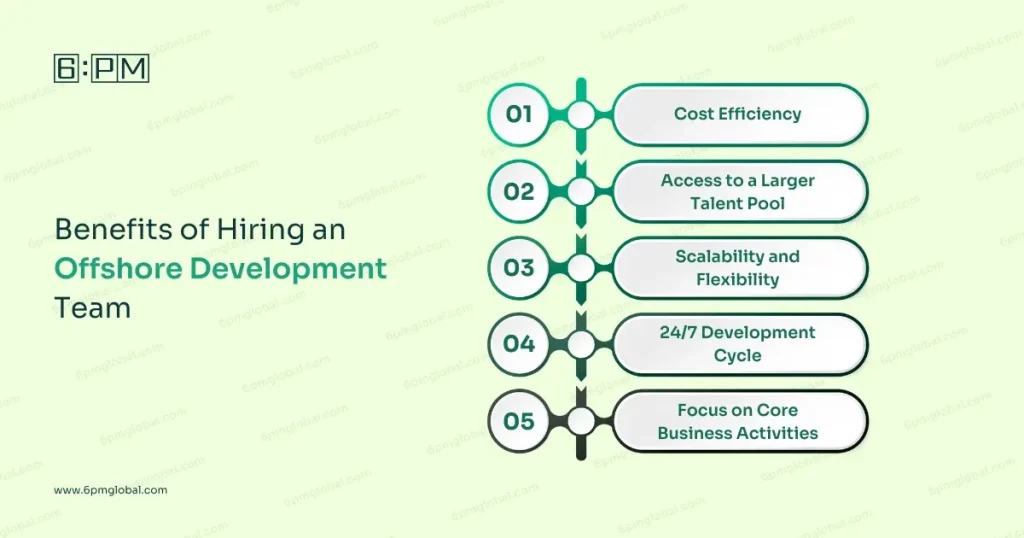
Cost Efficiency
Firstly, offshore development offers substantial cost savings, especially when hiring from regions like Eastern Europe, Asia, or Latin America. Labor costs in these areas are significantly lower compared to the U.S. or Western Europe.
Well, it allows businesses to reduce expenses while maintaining high-quality output.
Access to a Larger Talent Pool
Offshore outsourcing opens the door to a broader range of skilled developers who may not be available locally. This is especially useful when specific expertise is needed for complex projects that require niche skills.
Scalability and Flexibility
Offshore teams provide the flexibility to scale up or down according to project requirements. Businesses can adjust the size of their development teams quickly, helping them manage costs effectively while meeting tight deadlines.
24/7 Development Cycle
These offshore teams in different time zones enable continuous development, allowing work to proceed around the clock. Plus, it speeds up project timelines, leading to faster product delivery and reduced time-to-market.
Hence, this gives companies a competitive advantage.
Focus on Core Business Activities
By outsourcing development tasks to offshore teams, companies can focus more on their core business functions. It allows in-house teams to concentrate on strategic initiatives while offshore developers handle the technical aspects efficiently.
When Should You Hire Offshore Developers?
Hiring offshore developers can be a smart move in various situations. Whether you need specialized skills or want to reduce costs, offshore teams offer flexibility and expertise.
Below are vital scenarios when hiring offshore developers is beneficial:
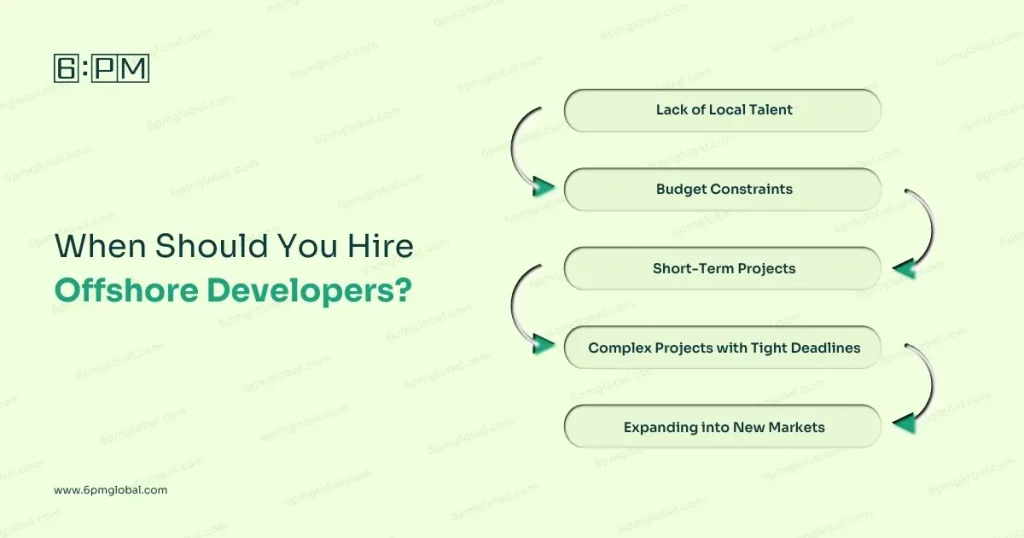
Lack of Local Talent
When your project requires specific skills that are hard to find locally, offshore developers can bridge the gap. They provide access to global talent and offer expertise in advanced technologies or niche areas that might be scarce in your region.
Budget Constraints
For businesses with limited budgets, offshore development provides high-quality services at a significantly lower cost. It is helpful for startups or small businesses that need to optimize expenses without compromising the quality of work.
Short-Term Projects
If your business requires temporary expertise or additional resources for a limited time, offshore offers a flexible solution. You can scale your team up or down based on project needs without long-term commitments, which makes it ideal for short-term or seasonal projects.
Complex Projects with Tight Deadlines
Offshore teams can accelerate project timelines by leveraging round-the-clock development. This is especially useful for large-scale, complex projects where meeting deadlines is critical.
Thus, offshore developers ensure work continues across different time zones, speeding up product delivery.
Expanding into New Markets
When entering new markets, offshore developers familiar with the local culture, language, and business practices can be valuable. They can provide insights and adapt your software to meet regional needs.
This helps you launch your product successfully in a new location.
How to Hire Offshore Software Developers: 5 Excellent Steps
Hiring offshore developers requires careful planning and consideration to ensure a smooth process and successful project outcomes. Let’s find out the steps to follow:

Define Your Goals and Needs
Begin by clearly outlining the scope, requirements, and objectives of your project. Determine the specific skills, technologies, and expertise needed to achieve your goals.
This clarity will help you identify the type of developers you require and guide your search for the right offshore talent. Also, knowing your exact needs will also streamline the hiring process and ensure clarity is understood.
Choose the Right Location
It is necessary to select the right region for the offshore development company. Consider factors like time zone compatibility, language proficiency, and the technical expertise available in Eastern Europe, Asia, or Latin America.
Time zone alignment impacts communication, while language skills and cultural understanding enhance collaboration. Plus, research the strengths of each region to choose a location that meets both your technical and operational needs.
Select a Reliable Partner
Collaborating with a trusted outsourcing agency is often the most effective way to find offshore developers. Agencies like Zartis or DistantJob specialize in connecting businesses with skilled developers who align with their project requirements and company culture.
Moreover, look for partners with a proven track record, transparent processes, and a deep understanding of your industry. A reliable agency will manage the hiring process. This ensures a smooth experience from start to finish.
Evaluate Candidates
Once you have potential candidates, thoroughly assess their technical skills and experience. Conduct interviews, coding tests, and review portfolios to ensure they meet your standards.
Well, it’s equally important to evaluate communication skills and cultural fit, as smooth collaboration is key to success. Look for developers who not only have the right technical abilities but can also work effectively within your team’s workflow and communication style.
Ensure Legal and Security Compliance
Lastly, Working with offshore teams requires careful attention to legal and security matters. Ensure your contracts clearly define data protection measures, intellectual property rights, and confidentiality agreements.
Also, be aware of data security regulations, especially if your project involves sensitive information. Establishing strong legal agreements and ensuring compliance with international standards will protect your business and minimize risks throughout the collaboration.
Challenges of Hiring Offshore Software Development Team
Well, you already know that hiring offshore developers offers many benefits, but there are also challenges that you need to navigate. Let’s see some key challenges and how to address them:
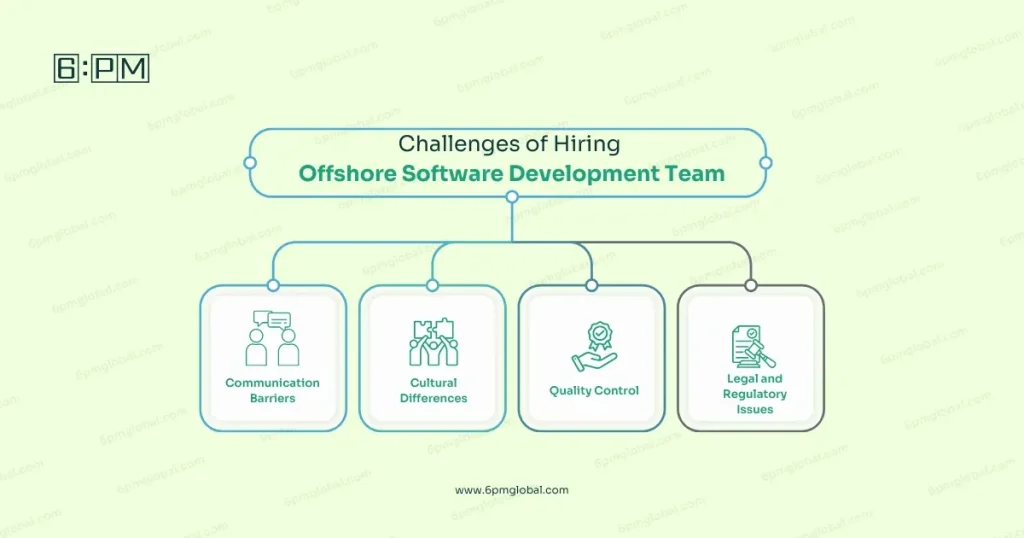
Communication Barriers
Language differences and time zone gaps can cause misunderstandings and delays. Clear communication is crucial, and tools like Slack, Zoom, or Microsoft Teams can help bridge the gap.
Regular check-ins, overlapping work hours, and detailed documentation can also reduce communication issues and keep everyone on the same page.
Cultural Differences
Work cultures vary across regions and can affect collaboration and project delivery. For example, approaches to feedback, decision-making, or deadlines may differ.
To overcome this, take time to understand the cultural nuances and set expectations early. Offering cross-cultural training and fostering mutual respect can create smoother teamwork and stronger partnerships.
Quality Control
Maintaining consistent quality across offshore teams can be challenging without clear guidelines. Detailed processes and performance benchmarks must be established from the start to address this.
Furthermore, regular monitoring, code reviews, and strong project management are key to ensuring that the output meets your standards. Effective documentation and frequent updates help maintain quality as well.
Legal and Regulatory Issues
Working with offshore teams involves navigating different legal systems and data protection laws. Businesses must ensure compliance with international regulations and secure intellectual property rights.
So, partnering with an experienced outsourcing firm that understands cross-border legalities can minimize these risks and provide legal safeguards for your business operations.
Final Verdict
To wrap up, offshore development provides you with a cost-effective way to access global talent, scale quickly, and stay competitive. While challenges like communication barriers and cultural differences exist, they can be managed with the right planning and reliable partners.
This means offshore developers bring specialized skills and flexibility to drive growth and innovation. Whether you’re a startup seeking agility or a large company needing expert resources, offshore web development offers a practical solution.
By carefully choosing your strategy and partners, you can successfully hire offshore developers to achieve your business goals.
All the best!
FAQs
Can offshore developers handle complex projects?
Yes, offshore developers often handle complex projects, offering specialized skills and expertise in various technologies. With clear requirements, strong project management, and regular communication, offshore teams can deliver large-scale or technically challenging software development projects.
How are offshore developers usually paid?
Offshore developers are paid through platforms like PayPal, bank transfers, or other payment gateways. Payment structures may vary, including hourly rates, fixed-price contracts, or milestone-based payments. It depends on the agreement and the nature of the project.
Are offshore developers reliable?
Offshore developers are generally reliable if you hire through trusted agencies or platforms with a strong vetting process. Ensuring clear communication, setting expectations, and regularly monitoring progress can further enhance reliability and help maintain the quality of work.