


Do you know that e-commerce software is the engine behind smooth online shopping? It shapes the way we buy, making every click easy and every checkout simple. This technology is transforming retail, bringing customers better, faster, and more personal shopping experiences.
Well, with ecommerce software development, your business can work faster, sell more, and keep customer information safe. It’s essential for any software development company wanting to grow in the online world.
Keep reading to learn the basics of e-commerce software: its essential parts, top benefits, common challenges, and costs. This guide has everything you need to know to start or improve your online store successfully.
What is E-commerce Software Development?
E-commerce software development is the process of building and enhancing software that powers online shopping. It includes creating user-friendly interfaces, shopping carts, secure payment gateways, and inventory management systems.
Here, developers focus on making e-commerce platforms efficient, scalable, and reliable to support the fast-growing digital marketplace. A report by Emarketer shows that worldwide e-commerce sales are expected to reach nearly $7 trillion in 2025. It shows how important robust e-commerce systems are for businesses today.
With strong development, these platforms can handle high traffic, support smooth transactions, and provide the essential tools for businesses to meet customer needs effectively.
Benefits of Ecommerce Software Development
Ecommerce software development offers many benefits that help businesses grow and effectively meet customer needs. Let’s see how custom-built e-commerce solutions can transform your e-commerce business:

Increased Efficiency and Productivity
Customized software automates repetitive tasks like order processing and real-time inventory management, saving time and reducing errors. This improves overall productivity, which allows development teams to focus on strategic tasks that drive business growth instead of routine operations.
Improved Customer Experience
A well-designed, intuitive interface makes shopping easy and enjoyable. It helps customers find what they need and encourages them to buy. By delivering a smooth, personalized journey, e-commerce software expands user satisfaction and increases conversion rates, building long-term customer loyalty.
Enhanced Security
Well, custom e-commerce software includes advanced security features like SSL encryption, secure logins, and regular data protection updates. This level of security reduces the risk of data breaches and helps maintain customer trust by ensuring their personal information stays safe.
Scalability and Flexibility
Customized software adapts as your business grows, handling increased traffic and seasonal surges with ease. Businesses can scale their operations without worrying about slowdowns or system overloads which keeps the customer experience smooth and reliable even during peak times.
Revenue Growth
E-commerce software can directly impact sales by optimizing the user experience, simplifying checkout, and integrating data analytics. It helps identify customer preferences, improve targeting, and create smoother purchasing pathways, ultimately leading to increased revenue.
Key Components of the E-commerce Platform
E-commerce software development relies on different essential components that create a seamless shopping experience. Here’s what goes into building a proper e-commerce platform:

Shopping Cart Software
A shopping cart simplifies the buying process, displaying key details like item descriptions, prices, taxes, and shipping costs. It allows customers to review their choices and make easy edits which creates a smooth and hassle-free shopping experience that encourages completed purchases.
Payment Gateway Integration
Secure, integrated payment processing lets customers complete transactions directly on your e-commerce website. The feature builds trust by offering a safe, convenient payment experience, reducing abandoned carts, and increasing customer confidence in purchasing.
Inventory Management
Real-time inventory tracking prevents overselling and stock shortages, ensuring that you have the products customers want. This system also helps with forecasting, so you can reorder in time and keep popular items in stock, enhancing customer satisfaction and trust.
Order Management
An automated order management system streamlines backend tasks like packaging, shipping, and returns. Businesses can meet customer expectations for quick, accurate service by simplifying these processes. It enhances the overall shopping experience and operational efficiency.
Shipping and Tax Calculation
Integrated shipping and tax calculators provide accurate estimates, giving customers clarity on final costs before checkout. This transparency not only improves the customer experience but also helps businesses stay compliant with tax regulations, ensuring smooth operations.
Challenges in Ecommerce Software Development
Ecommerce software development comes with its own set of challenges. Let’s see some of the obstacles businesses face when building a reliable platform:

Scalability
As your online business grows, your software must scale to handle increased traffic and transactions smoothly. Without scalable systems, high-traffic periods can cause slowdowns, frustrating customers and impacting sales. Planning for scalability is essential to ensure a seamless shopping experience as demand increases.
Security Risks
E-commerce platforms are frequent targets for cyberattacks. Protecting sensitive information like credit card details requires strong security protocols and frequent updates. Also, perfect security protects customer trust and keeps data safe from breaches, an absolute necessity in today’s digital landscape.
User Experience
Customers expect easy navigation and fast load times. Poorly designed interfaces or slow performance can lead to high bounce rates, with shoppers leaving before making a purchase.
Creating a streamlined, user-friendly experience is needed to retain visitors and improve conversions.
Integration Complexity
E-commerce platforms rely on integrating multiple systems like CRM, ERP, and third-party plugins. Ensuring smooth compatibility and functionality between these systems can be complex but is tough for seamless operations.
A strong integration strategy helps maintain efficiency and prevents operational issues.
Choose the Right E-commerce Software for Your Business
Choosing the right e-commerce software for your business is a great decision that impacts growth, customer experience, and security. Here are some factors to consider:
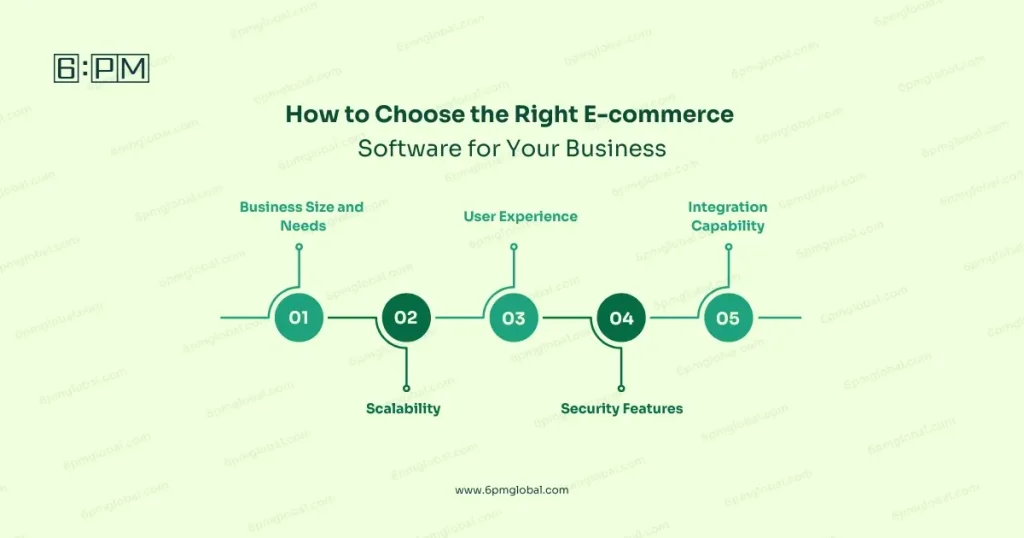
Business Size and Needs
Think about your business’s specific needs. Small businesses often find SaaS (Software as a Service) solutions ideal for ease of use and affordability. In contrast, larger businesses with complex requirements may need custom-built systems for greater flexibility and control.
Hence, customizing your choice to your business size and goals will ensure a more effective solution.
Scalability
As your business grows, so will your software needs. Choose a platform that can handle increased traffic, product listings, and transactions without frequent migrations or costly updates.
So, a scalable solution allows your e-commerce business to expand seamlessly, preventing performance issues during peak periods and supporting long-term growth.
User Experience
Customer experience is key to success in e-commerce. Look for software with an intuitive, responsive interface that makes navigation easy and enjoyable. Mobile compatibility is essential, as mobile commerce continues to grow rapidly.
A smooth, accessible user experience boosts customer satisfaction and increases conversion rates.
Security Features
Security is a top priority in e-commerce. Make sure the platform has built-in protections like data encryption, secure payment options, and regular updates to defend against cyber threats.
Strong security safeguards customer data and reinforces their trust, which is essential for your brand’s reputation.
Integration Capability
Many businesses rely on third-party services, such as CRM, analytics, and marketing tools. Ensure the e-commerce software you choose allows smooth integration with these systems.
Easy compatibility with your existing tools will simplify operations and enhance efficiency. It helps you manage various aspects of the business more effectively.
Cost of E-commerce Software Development
The cost of E-commerce software development depends on factors like customization, complexity, and required features. Basic SaaS (Software as a Service) solutions can start at an affordable monthly rate which makes them ideal for smaller budgets.
In contrast, fully custom-built e-commerce software typically requires a higher upfront investment due to customized features and greater flexibility. Additionally, ongoing maintenance, updates, and scalability costs should be expected as your business grows. If you are still confused about the cost of e-commerce software development and need expert tech guidance you can contact us.
While the initial investment may be higher, a quality platform often results in long-term savings by increasing productivity, improving customer experience, and driving revenue growth.
Conclusion
To wrap up, ecommerce software development goes beyond building a simple online store; it’s about developing a cohesive system that improves customer experience, ensures secure transactions, and scales as your business grows.
So, choosing the right approach and features is essential for creating a platform that meets your current needs and adapts to future demands. Investing in quality software can provide a solid foundation for long-term success in the competitive digital marketplace.
Remember, the right e-commerce software development can make all the difference, supporting growth, efficiency, and customer loyalty. Take time to assess your needs and choose an e-commerce solution that aligns with your goals.
Best wishes!
FAQs
Why is payment gateway integration important?
Payment gateway integration enables secure, smooth transactions on your e-commerce website. It protects customer data, speeds up checkout, and enhances trust. This seamless payment process reduces cart abandonment rates and provides a better buying experience.
Can e-commerce software integrate with other business tools?
Yes, most e-commerce platforms can integrate with tools like CRM systems, ERPs, and marketing automation tools. These integrations streamline business operations, helping manage customer data, inventory, and analytics more effectively for better decision-making.
Is mobile compatibility important for e-commerce software solutions?
Yes, mobile app compatibility is necessary, as many customers shop on mobile devices. A mobile-friendly platform ensures smooth navigation and fast loading on smartphones, improving customer experience and helping businesses capture more sales from mobile shoppers.
What is the difference between SaaS and custom e-commerce software?
SaaS e-commerce software is pre-built and offered as a subscription, making it quick and affordable. Custom e-commerce software is built from scratch, tailored to business needs, and provides more flexibility, though it requires a higher investment.