


Have you ever heard of the Co-development software approach? Well, it’s basically changing the game in software development, with 85% of companies reporting improved collaboration between teams. This method unites diverse expertise, speeds up development, and encourages innovation.
But how do you implement this software properly?
When implementing co-development software, focus on clear communication, align goals between teams, and establish a well-defined process. Regular feedback loops and a shared responsibility mindset are necessary as well.
Keep reading to learn how co-development software approach can transform your projects and help you overcome common challenges. We’ll explore benefits, features, best practices, and more that can maximize efficiency and unlock new levels of innovation for your organization.
Let’s begin!
Definition of Co-Development Software Technique
Co-development software is a collaborative approach in software development where multiple teams work together throughout the entire software development cycle. These teams can be from different departments within one organization or from different organizations.
Unlike traditional methods where each team works in isolation, co-development focuses on joint efforts, shared responsibilities, and collective decision-making. The method encourages open communication, aligned goals, and teamwork at every stage of development, from planning to deployment.
Therefore, the goal here is to use different skills and perspectives. It results in faster development, better innovation, and higher-quality software outcomes through continuous collaboration.
Traditional Software Development Vs Co-Development Software Process
Here’s a comparison between traditional software development and co-development software approaches:
| Aspect | Traditional Development | Co-Development |
|---|---|---|
| Team Structure | A single team handles all phases | Multiple teams collaborate across all phases |
| Perspective | Simplified but limited perspectives | Diverse skills lead to complete problem-solving |
| Task Execution | Sequential task execution | Parallel task execution |
| Decision-Making | Centralized and often separated | Shared and collective decision-making |
| Innovation | Incremental innovation | Accelerated and cross-functional innovation |
How Actually Co-Development System Works
Co-development involves a structured process where collaboration and alignment are the main ones. Below are the main steps in how co-development works:
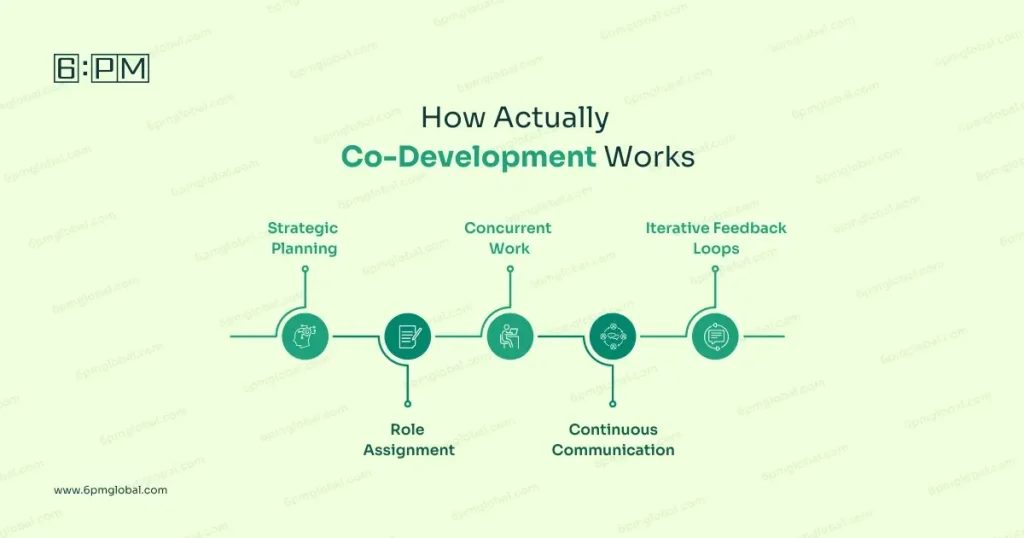
Strategic Planning
The process begins with defining clear goals, objectives, and project scope. Teams from different areas come together to outline the project map. This planning phase makes sure that everyone understands their role and the overall vision. It sets the stage for smooth collaboration as well.
Role Assignment
Teams are assigned tasks based on their expertise and strengths. Clear responsibilities and accountability are established. The step ensures that each team knows what they need to deliver.
Also, reducing overlap and improving efficiency across the project.
Concurrent Work
Unlike traditional methods, co-development allows different teams to work on separate parts of the project at the same time. The parallel execution speeds up product development and enables faster progress, as teams can address different challenges simultaneously while staying aligned.
Continuous Communication
Regular updates, meetings, and shared platforms keep all teams informed and aligned. Effective communication is necessary to avoid misunderstandings and ensure that every part of the project moves in sync, minimizing delays and rework.
Iterative Feedback Loops
Throughout the project, feedback is gathered frequently and adjustments are made as needed. This continuous improvement process allows for quick course corrections.
Plus, it ensures the final product meets the quality standards and objectives defined at the start.
Benefits of Co-Development Software
The co-development software system has many advantages that expand the software product development process. Let’s find out the main benefits that co-development software offers:

Efficiency
Co-development speeds up the development process by allowing multiple teams to work on different parts of a project at the same time. The effort reduces delays and shortens the overall time-to-market, enabling quicker product launches and faster response to market needs.
Innovation
By bringing together teams with different skills, backgrounds, and ideas, co-development encourages creative software solutions to complex problems. The blend of perspectives fosters innovation that leads to more advanced features and unique approaches that might not emerge in a single-team environment.
Quality Improvement
With different development teams involved, testing and validation become more rigorous and thorough. Multiple teams can identify issues early, provide cross-functional feedback, and ensure that the software meets high standards.
Well, this collaborative approach decreases bugs and enhances overall product quality.
Risk Mitigation
Co-development spreads tasks across teams, minimizing the risk of bottlenecks and delays. When responsibilities are shared, challenges can be addressed more quickly, and the workload is balanced.
The distributed effort helps avoid project stalling and keeps development on track.
Continuous Learning
Lastly, teams working together gain exposure to new tools, methodologies, and technologies from each other. The ongoing exchange of knowledge and skills helps team members grow professionally.
Hence, it adopts better practices that they can apply in future projects, leading to continuous improvement across the organization.
Aspects to Evaluate When Selecting Co-Development Software Process
Selecting the right co development software method is important for smooth collaboration and project success. Below are the aspects to consider:
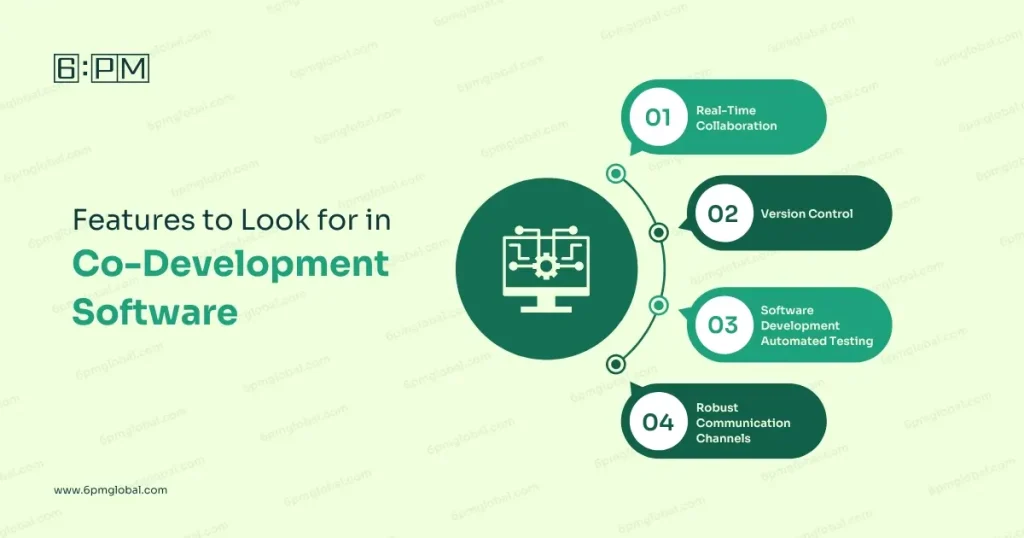
Real-Time Collaboration
Effective co-development tools should allow teams to work together in real-time. It helps with instant updates and synchronized progress. Also, this feature ensures that all team members are on the same page, reducing delays and confusion.
Thus, real-time collaboration is essential for handling complex projects where different teams need to stay aligned.
Version Control
Managing multiple versions of code or documents is crucial in co-development. A good version control system tracks changes, enables easy rollback if needed, and helps avoid conflicts when different teams are working on the same files.
Well, this feature means that everyone is always working with the latest and most stable version.
Software Development Automated Testing
Automated testing features help maintain software quality across different teams and project phases. Integrated testing tools run tests continuously and flag issues early in the development process.
The automation saves time, reduces manual errors, and ensures that each iteration meets quality standards before moving forward.
6PM offers access to a network of remote testers and developers specializing in high-velocity development. It ensures strong automated testing processes that improve software quality and reduce time-to-market.
Robust Communication Channels
Clear and effective communication is key in co-development. The software should include built-in chat, video calls, and file-sharing tools, allowing teams to discuss issues, share updates, and collaborate without switching platforms.
Therefore, reliable communication channels keep all stakeholders informed, which ensures smooth coordination across different teams and time zones.
Best Practices for Implementing Co-Development Software Method
Implementing the co-development software method effectively requires following certain best practices to maximize its potential. Here are the best practices to consider:
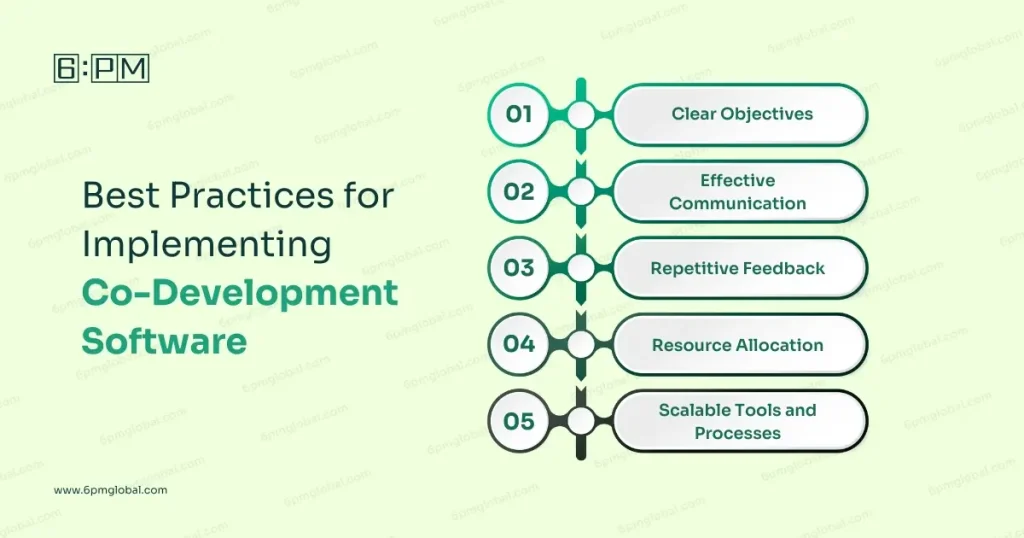
Clear Objectives
Start by setting well-defined goals and aligning all teams on these objectives. Everyone should understand the project’s vision, timeline, and key deliverables.
Moreover, clear objectives provide direction and ensure that all teams are working towards the same outcome. It minimizes confusion and prevents misaligned efforts during the developers development process.
Effective Communication
Regular and transparent communication is needed. Hold frequent check-ins, share updates across teams, and leverage shared platforms for discussions. Effective communication ensures everyone stays informed and aligned.
Plus, it helps to quickly address issues and maintain a smooth workflow, even when teams are distributed across different locations or time zones.
Repetitive Feedback
Establish a process for continuous review and feedback throughout the project. Regular feedback loops help catch issues early, allowing teams to make timely improvements.
Also, repetitive feedback makes sure that the project remains aligned with its goals and quality standards, while also giving teams a chance to learn and adapt as the development progresses.
Resource Allocation
Assign tasks based on team strengths and expertise. Proper resource allocation ensures that each task is handled by those best suited for it, improving efficiency and output quality.
Balanced workloads across teams also help prevent bottlenecks and enable faster progress, keeping the project on schedule.
Scalable Tools and Processes
Choose tools and establish processes that can scale as the project grows. As new teams or features are added, the software and workflows should be able to expand seamlessly.
Scalable solutions ensure that the co-development environment remains efficient and effective, even as project demands increase or evolve.
Challenges of Co-Development Software Strategy
While the co-development software process offers many benefits, it also comes with specific challenges that need to be managed effectively. Let’s find out some challenges to consider:
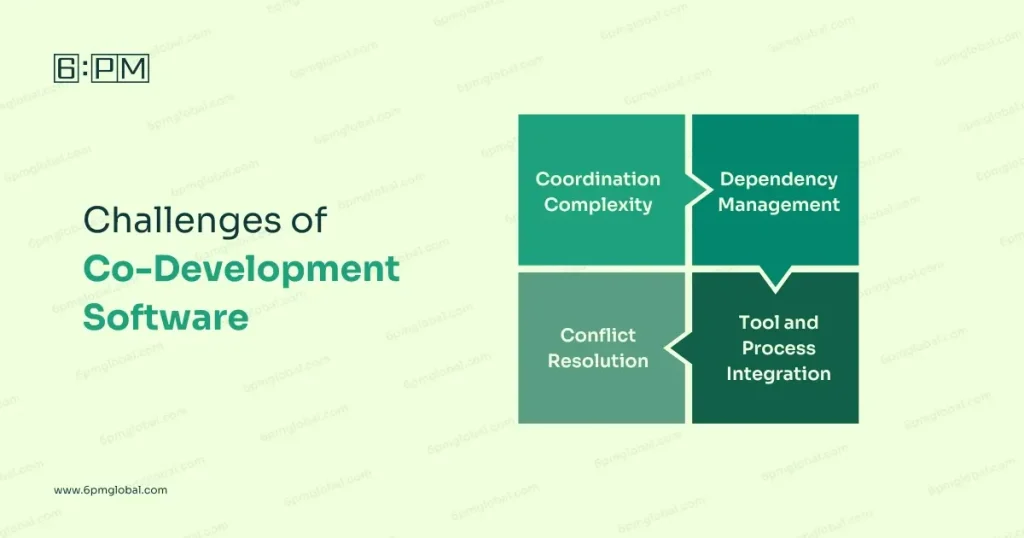
Coordination Complexity
Managing multiple teams working across different aspects of a project can be complex. Ensuring alignment, avoiding overlaps, and keeping everyone on track requires strong leadership and clear processes.
Also, coordination challenges can lead to delays or miscommunication if not addressed with well-organized workflows and regular status updates.
Dependency Management
In a co-development environment, different teams often work on interconnected components. Coordinating these dependencies requires careful planning and sequencing.
Remember that a delay in one team’s work can impact others, leading to errors. Effective dependency management through well-defined timelines and communication is necessary for keeping the project moving smoothly.
Conflict Resolution
With diverse teams, conflicts can arise due to differing priorities, workflows, or opinions. Addressing these conflicts promptly and effectively is important to avoid disruptions.
Furthermore, establishing clear decision-making processes and promoting a culture of collaboration helps in resolving conflicts. Plus, it keeps the focus on the project’s shared objectives.
Tool and Process Integration
Bringing together different teams often involves integrating various tools and processes. Ensuring that all systems work smoothly can be challenging, especially when teams use different platforms.
Not that compatibility issues or inefficient tool usage can slow down progress. Selecting versatile, interoperable tools and aligning processes from the start can mitigate this challenge.
Final Verdict
Co-development software is a powerful way to drive innovation, speed up delivery, and produce high-quality products by utilizing the expertise of multiple teams.
While it does come with challenges like coordination and project management, these can be addressed with thoughtful planning and strong communication.
So if you’re trying to remain competitive in the market, adopting co-development practices can be a strategic move. By embracing collaboration and focusing on clear goals, you can maximize the benefits for sustained growth.
FAQs
What tools are used for co-development software systems?
Tools like GitHub, Jira, Slack, and Trello are often used in co-development. These platforms facilitate real-time collaboration, version control, task management, and communication among distributed teams.
How do teams handle conflict in the co-development method?
Conflict resolution involves open dialogue, setting clear priorities, and finding common ground among teams. Establishing predefined processes for handling disputes helps keep the project on track despite differences.
Is co-development suitable for small businesses?
Yes, co-development can benefit small businesses by allowing them to collaborate with external partners or specialized teams. It enables access to broader expertise and resources without needing large in-house teams.